
DISRUPTIVE / SCIENCE / RETROSPECTIVE
FILE Nº 035
Science · Retrospective
Viking at Fifty: The Summer NASA Landed on Mars, Twice, and Asked Whether Anything Lived There
Fifty years ago two identical spacecraft landed on Mars seven weeks apart, returned the first photographs from its surface, and ran the only direct search for life ever flown. The answer they brought back is still being argued with.
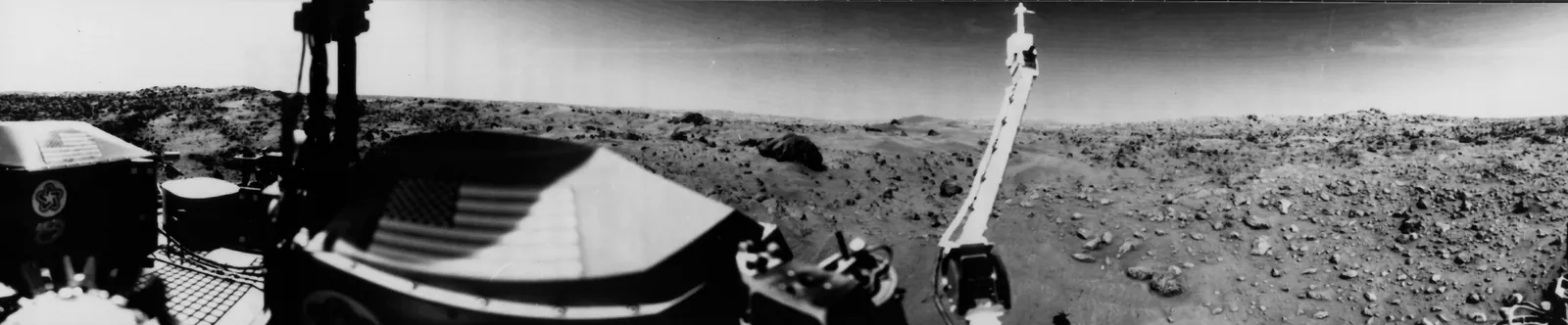
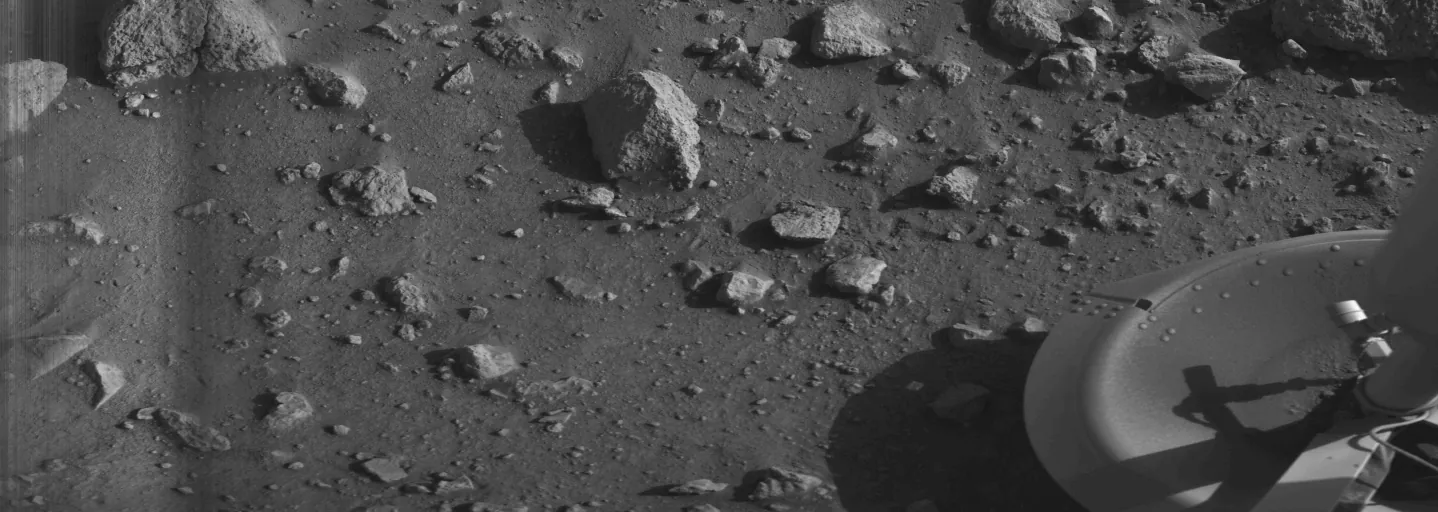
The landing was supposed to happen on the Fourth of July. NASA had aimed Viking 1 at Mars for the United States Bicentennial, but the photographs its orbiter sent back after arriving on 19 June 1976 showed the chosen landing site strewn with boulders, and the mission team spent sixteen days hunting for somewhere safer. On 20 July 1976, exactly seven years after Apollo 11 reached the Moon, the Viking 1 lander separated from its orbiter and touched down in Chryse Planitia, the Golden Plain. It was the first spacecraft to land successfully on Mars and work there, and within minutes it had transmitted the first photograph ever taken from the Martian surface, a view of its own footpad on the soil, taken to confirm the lander was sound before anything else.
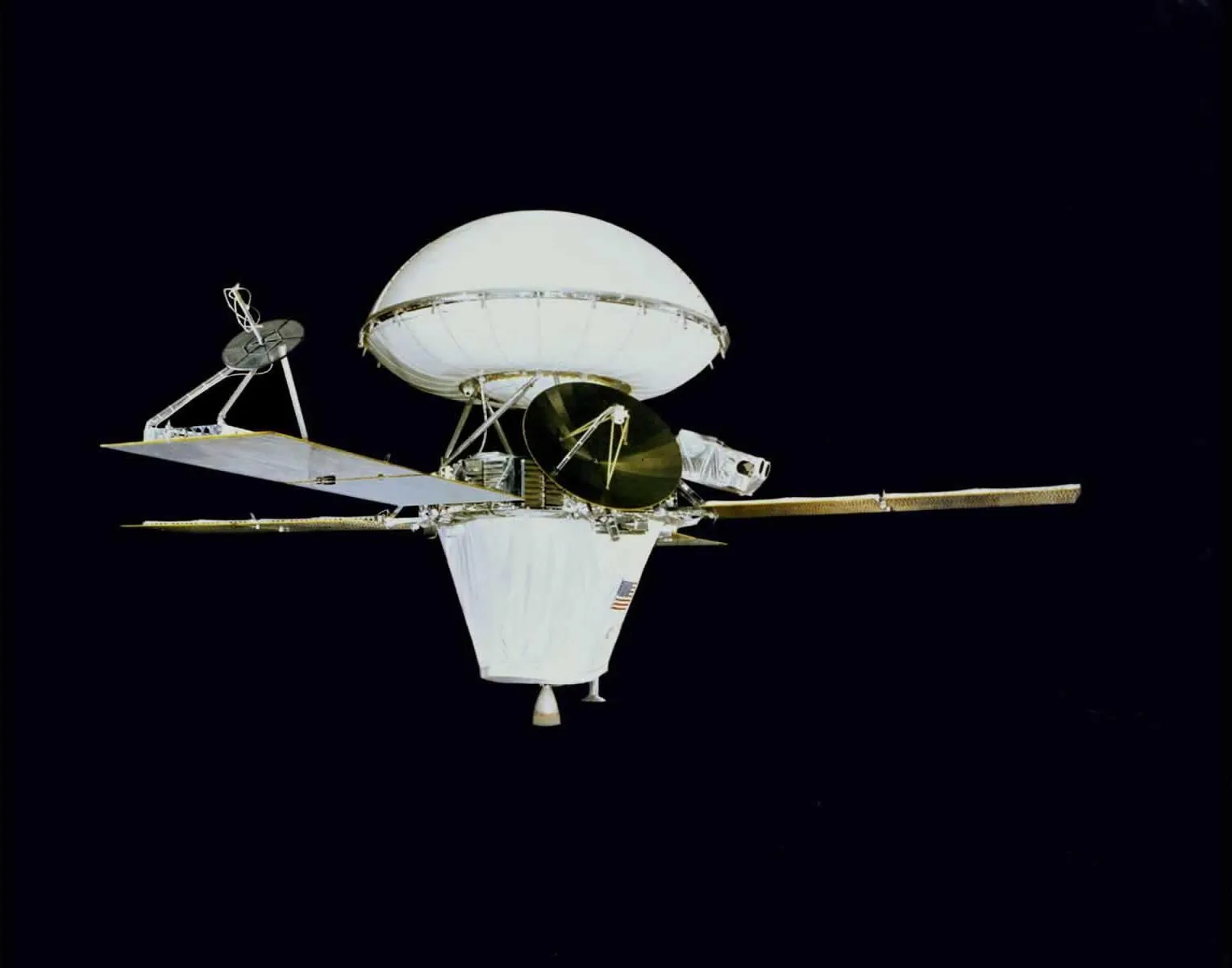
Viking was two missions flown as one programme, managed by NASA’s Langley Research Center. Viking 1 launched from Florida on 20 August 1975 and Viking 2 on 9 September 1975, each a Titan IIIE with a Centaur upper stage carrying an identical pair: an orbiter to photograph Mars from above and relay the lander’s data, and a lander to study the planet from its surface. Viking 2 entered orbit on 7 August 1976, and its lander touched down on 3 September in Utopia Planitia, more than 4,000 miles from its twin. The programme cost roughly one billion dollars in the money of its day, about $1.06 billion by the Planetary Society’s accounting, which notes it remains NASA’s most expensive robotic planetary mission.
The first Mars, seen properly
What the orbiters returned remade the map. Working for years, Viking 1’s orbiter until 1980 and Viking 2’s until 1978, they photographed the whole planet, produced the first global maps of Mars and revealed a world split in two: smooth low plains in the north, cratered highlands in the south, with volcanoes, canyons and the channels of ancient floods between. The landers, meanwhile, measured their new homes: iron-rich red soil, temperatures at the sites running from about minus 120 to minus 20 degrees Celsius, and a pink sky. Every Mars mission since has begun from the planet Viking drew.
The experiment that answered a question with a riddle
Each lander carried three biology experiments, the only direct search for life ever flown to another planet, plus a gas chromatograph mass spectrometer to hunt for organic molecules, the chemistry life is built from. The Labeled Release experiment fed Martian soil a nutrient broth tagged with radioactive carbon and watched for tagged gas, the signature of something eating. It got one: gas was released, at both landing sites, in a pattern that weakened when the soil was first sterilised by heat. But the activity did not grow as living cultures grow, and repeat feedings produced nothing more. The Gas Exchange experiment saw oxygen released when soil met humidity. The Pyrolytic Release experiment found hints of carbon being fixed into organic material, including, awkwardly, in some heat-sterilised control runs.
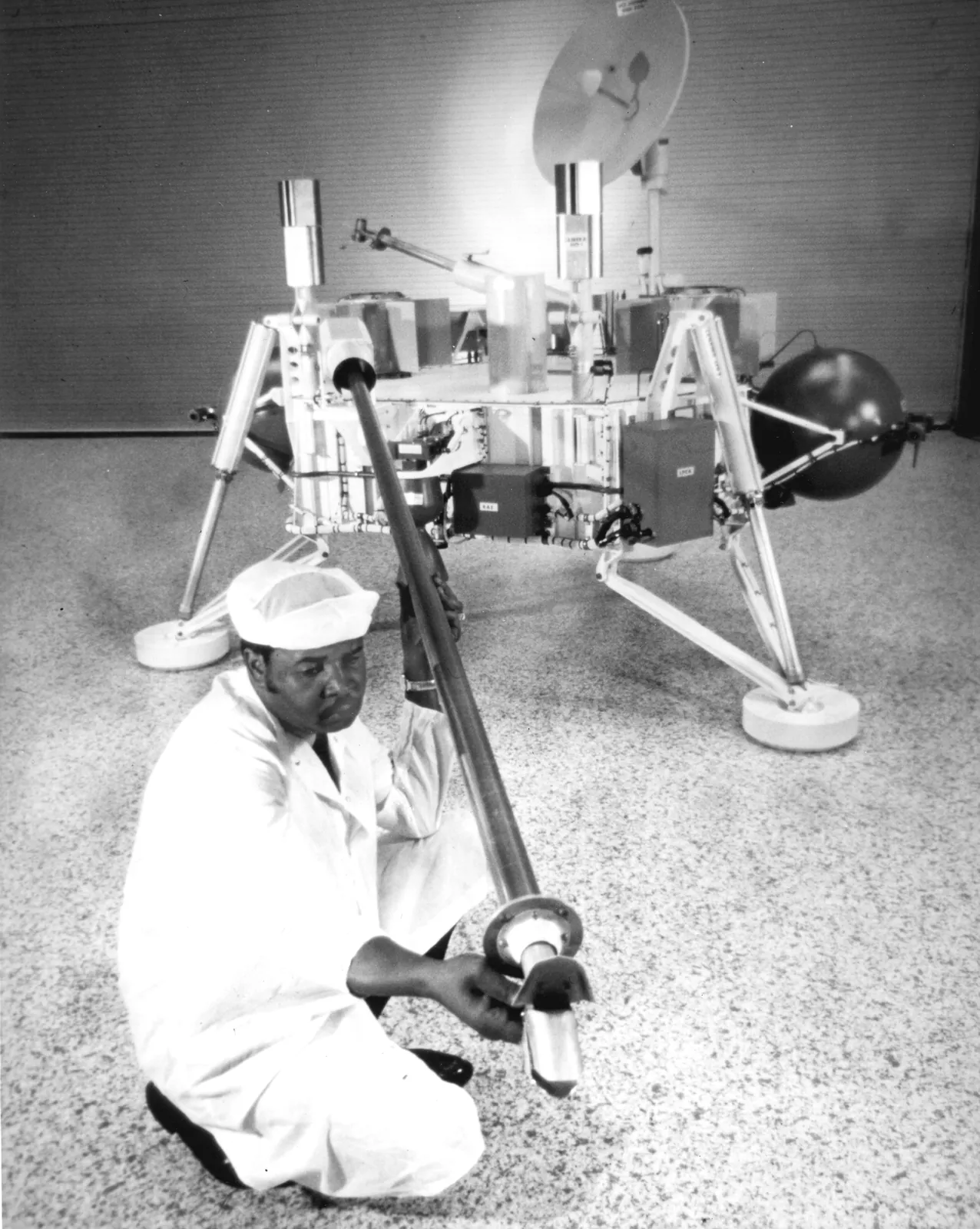
Against those flickers stood the mass spectrometer’s silence: heated soil samples yielded no organic molecules at all, beyond traces of the solvents used to clean the instrument on Earth. Without organics, the mission’s investigators concluded, the biology results could not be evidence of life, and the strange chemistry was attributed to oxidising agents in the soil itself. NASA’s own summary of the programme is careful in a way the headlines of 1976 were not: the results did not demonstrate conclusive biosignatures at either landing site, and the experiments, and their limits, are still being assessed fifty years on, not least because later missions have found organic molecules on Mars that Viking’s instrument reported absent.
Built to last ninety days, heard for years
The landers were the durable surprise. Viking 2’s batteries failed in April 1980, after three years and eight months on the surface; its last data arrived on 11 April 1980. Viking 1 simply kept going, transmitting until November 1982, more than six years after touchdown, when the programme formally ended. For the two decades that followed, most of what was known about Mars rested on Viking’s maps, weather records and soil chemistry, and its way of working, orbiters scouting and certifying a site before a lander was committed to it, became the template every successor followed: Pathfinder in 1997, the Spirit and Opportunity rovers, Curiosity and Perseverance.
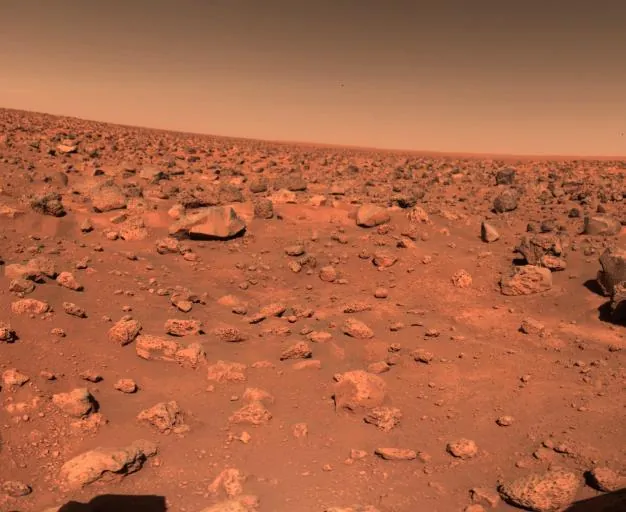
Fifty years on, the disruption Viking worked is double. As engineering, it proved a spacecraft could be flown to another planet, landed softly on a site chosen from orbit weeks earlier, and kept alive for years, a proof no Mars programme has since been able to skip. As science, it set the terms of the argument that still runs astrobiology: three experiments that behaved as if something in the soil was chemically alive, and one instrument insisting the soil held none of life’s ingredients. Mars exploration has been, ever since, the long attempt to settle which Viking instrument was telling the truth.
Keep reading
More from the filing cabinet.
Technology · News · Europe · Dresden, Germany
Dresden’s Billion-Euro Bet on Chips for the Physical World
GlobalFoundries has topped out its €1.1 billion SPRINT fab expansion and unveiled FDX Fusion, a chip platform designed for what the industry now calls Physical AI.
Innovation · News · North America · United States
Washington’s $350 Million Quantum Wager: From Blueprints to Hardware
DARPA advanced four more companies to the final stage of its Quantum Benchmarking Initiative, while the Pentagon lined up a conditional $150 million loan for PsiQuantum’s factory.
Features · Evergreen · Global · the idea, not a place
What “Disruptive” Actually Means
The word on our masthead has a precise definition, and most people use it wrong. A field guide to Clayton Christensen’s theory, thirty years on.