
DISRUPTIVE / TECHNOLOGY / EXPLAINER
FILE Nº 039
Technology · Explainer
Two Tubes, No Signals, 2,300 Metres of Rock: How the Gotthard Base Tunnel Works
At 57 kilometres the Gotthard Base Tunnel is the longest railway tunnel on Earth, and the flattest way through the Alps. Its design is two one-way tubes, a cross passage every 325 metres, and a safety system built around the tube that is not on fire.
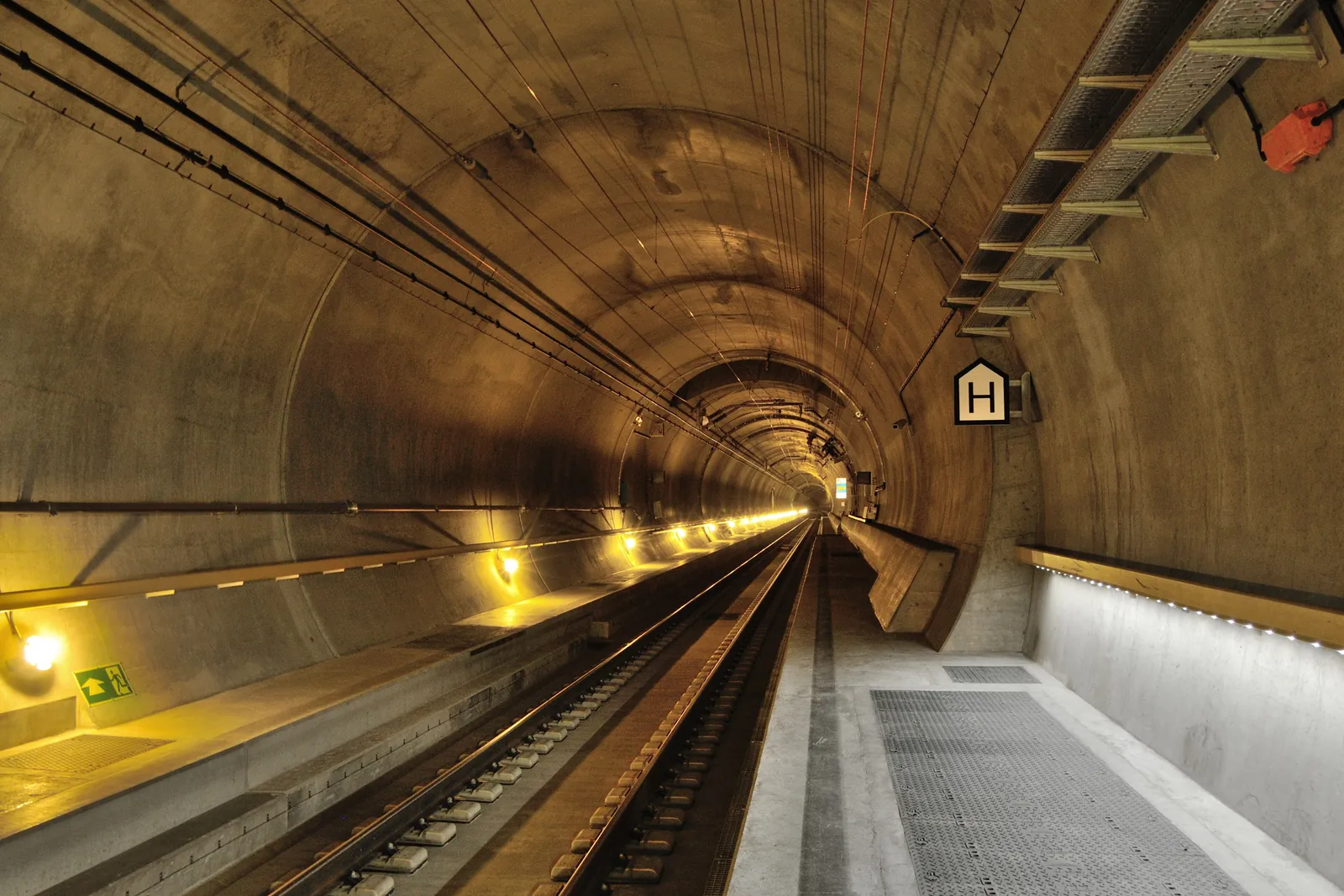
Start with the geography the tunnel abolishes. The old Gotthard railway climbs into the Alps, loops through spiral tunnels and crosses the massif at altitude, slow and steep. The Gotthard Base Tunnel ignores the mountain’s shape entirely. It runs flat and almost level for 57.09 kilometres from Erstfeld in the canton of Uri to Bodio in Ticino, with its highest point just 550 metres above sea level and up to 2,300 metres of rock above the rails. It opened on 1 June 2016, scheduled services began that December, and it remains the longest railway tunnel in the world and the deepest traffic tunnel on Earth.
Two tubes, one direction each
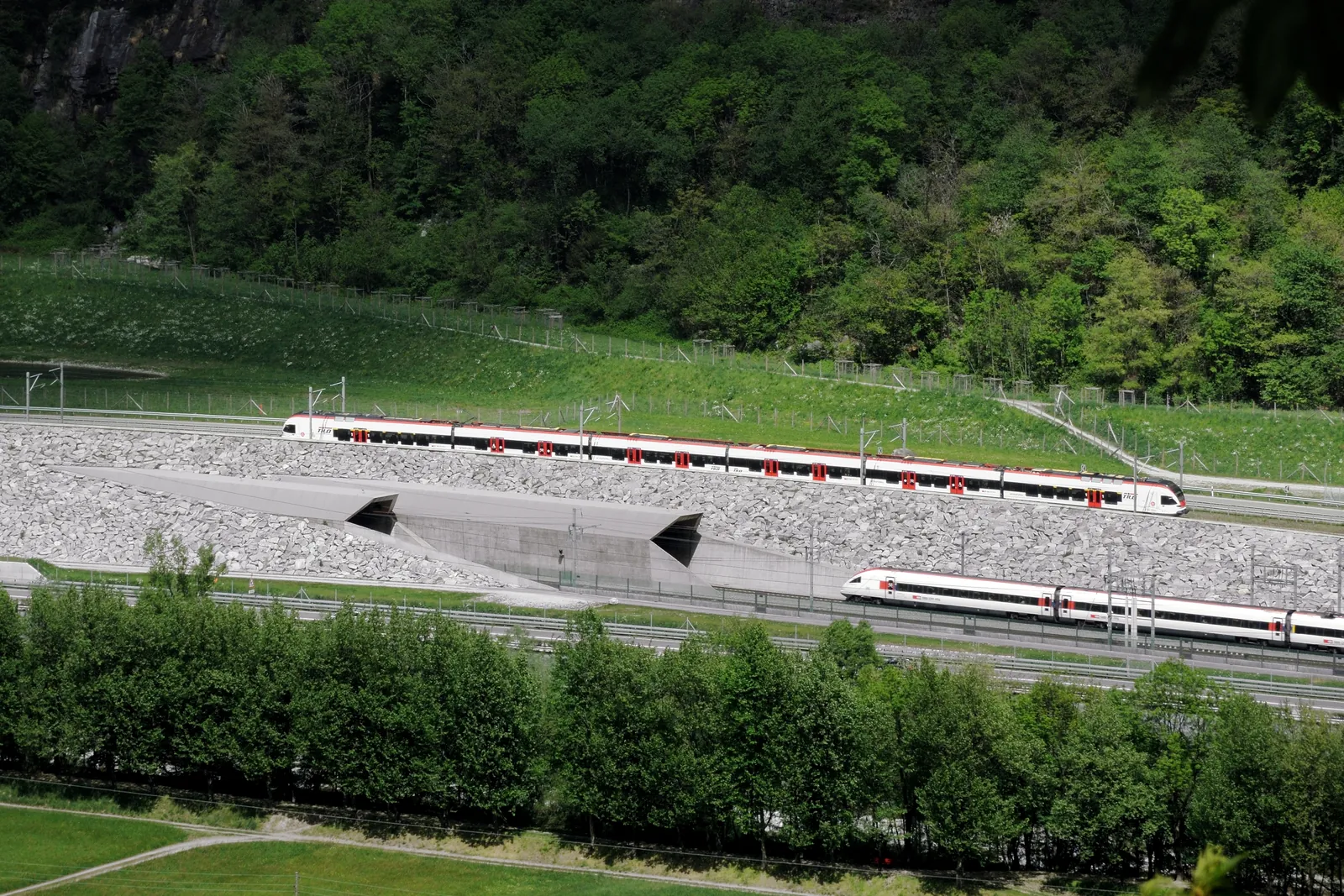
The tunnel is not one hole but a system 151.84 kilometres long in total, counting every tube, shaft and passage. The running railway is two parallel single-track tubes, their axes typically 40 metres apart. Every train travels one way through its own tube, so the deadliest railway accident, the head-on collision, is designed out by geometry. At two points along the route, roughly a third and two thirds of the way through, crossover caverns at Sedrun and Faido let trains switch tubes, so a single tube can be closed for maintenance or an incident while the other carries traffic in both directions at reduced capacity.
Safety: the other tube is the escape route
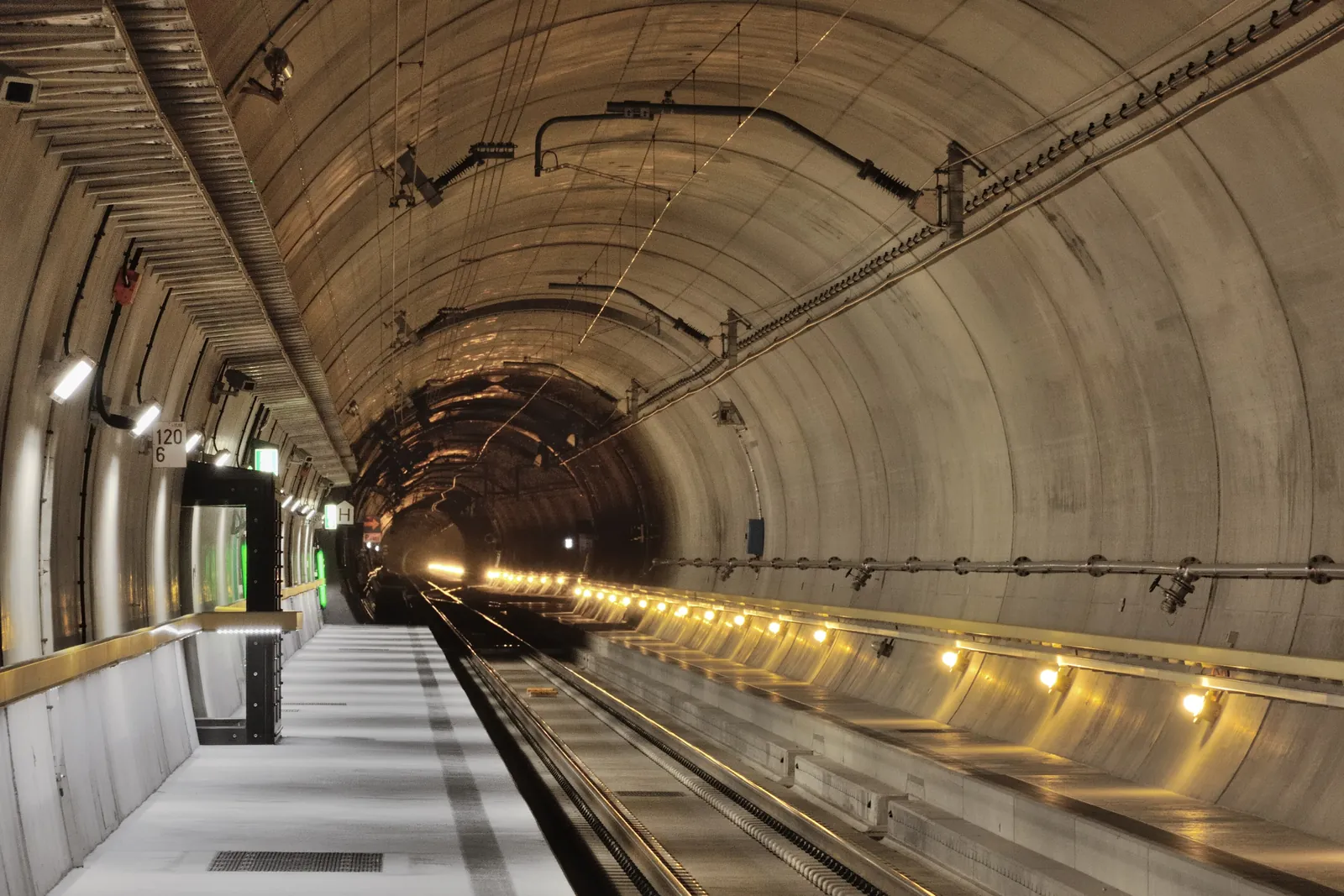
The two tubes are connected by cross passages every 325 metres, sealed by fire-proof, airtight doors. That spacing is the heart of the safety concept: if a train stops in one tube because of fire, passengers walk at most a few hundred metres to a cross passage and through it into the other tube, which is kept supplied with fresh air and serves as the safe area. Sedrun and Faido are more than crossovers; they are multifunction stations, underground complexes with specially ventilated emergency-stop platforms, smoke extraction and technical caverns, reached from the surface by access tunnels built for construction. Firefighting and rescue trains are based at the maintenance and intervention centres at Erstfeld and Biasca, at either end of the line.
No signals to read
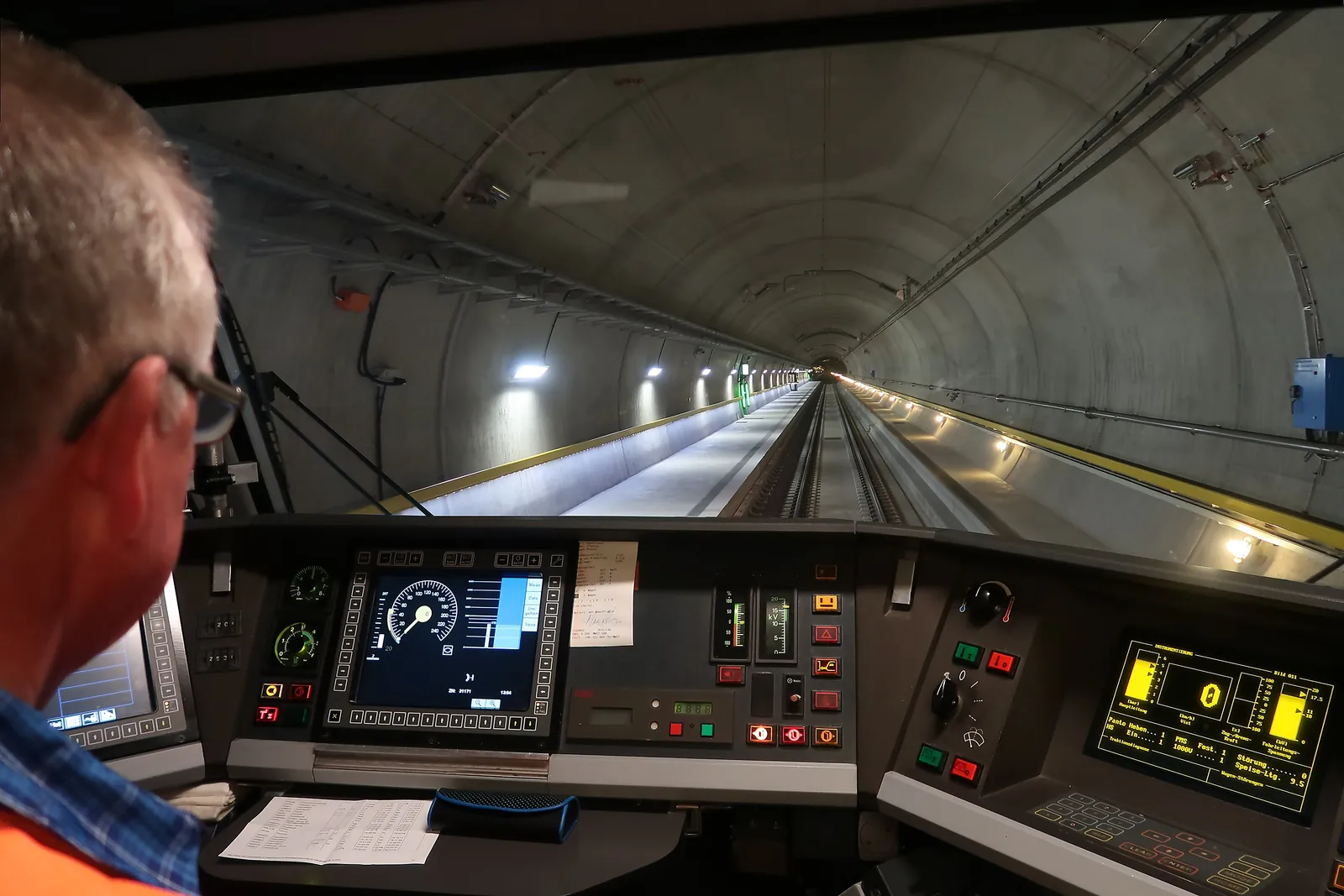
There are no lineside signals in the tunnel. Trains run under ETCS Level 2 cab signalling, in which the control system continuously knows each train’s position and speed and displays the authority to move directly in the driver’s cab. Passenger trains are permitted up to 250 kilometres per hour in the tunnel and run at up to 200 in the timetable; freight is permitted to 160 and timetabled around 100. A transit takes a little under 20 minutes. The line is designed for up to 260 freight trains and 65 passenger trains a day, and the flat route it completes, with the Ceneri Base Tunnel to its south, cut the Zurich to Lugano journey by up to about 45 minutes.
Seventeen years of digging
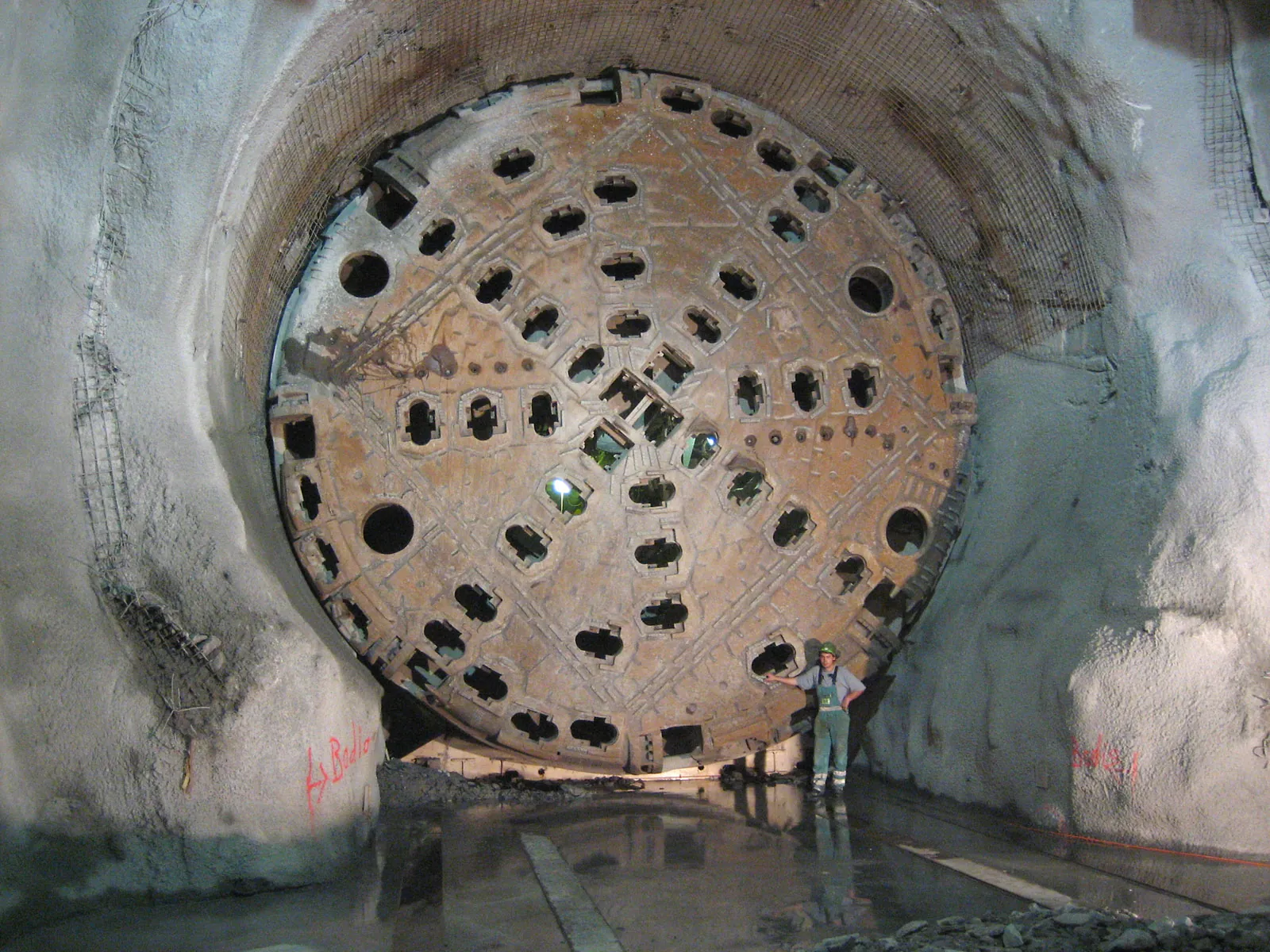
The tunnel was built by AlpTransit Gotthard AG, a wholly owned subsidiary of Swiss Federal Railways, for the Swiss Confederation, and SBB operates it today. Construction, excluding exploratory work, took 17 years. About 80 percent of the main tubes were driven by tunnel boring machines and the rest by drill and blast, working from intermediate access points at Amsteg, Sedrun and Faido that divided the mountain into sections. The works excavated 28.2 million tonnes of rock, in a tunnel where the rock temperature reaches about 46 degrees Celsius. The effective cost came to 12.2 billion Swiss francs. The disruption is measured in what the flat line replaced: freight that once needed extra locomotives to climb the Alps now crosses them at sea-level gradients, under a mountain it never has to climb.
Keep reading
More from the filing cabinet.
Science · Retrospective · North America · United States
Pinpoint: Apollo 12, Struck by Lightning, Landed Within a Short Walk of a Robot
In November 1969 Apollo 12 launched into a rainstorm, was struck by lightning twice in the first minute, and still landed on the Moon 163 metres from the Surveyor 3 lander. Apollo’s second landing was the one that proved it could choose its spot.
Technology · News · Europe · Dresden, Germany
Dresden’s Billion-Euro Bet on Chips for the Physical World
GlobalFoundries has topped out its €1.1 billion SPRINT fab expansion and unveiled FDX Fusion, a chip platform designed for what the industry now calls Physical AI.
Innovation · News · North America · United States
Washington’s $350 Million Quantum Wager: From Blueprints to Hardware
DARPA advanced four more companies to the final stage of its Quantum Benchmarking Initiative, while the Pentagon lined up a conditional $150 million loan for PsiQuantum’s factory.