
DISRUPTIVE / SCIENCE / NEWS
FILE Nº 037
Science · News
Twice Around the Earth to Reach Mars: ESCAPADE’s Powered Flybys Rewrite the Route to the Red Planet
NASA’s twin ESCAPADE spacecraft, Blue and Gold, slingshotted past Earth on 7 and 9 November, firing their engines at closest approach in a powered flyby no Mars-bound mission had executed before. A ten-month cruise to Mars is now under way.
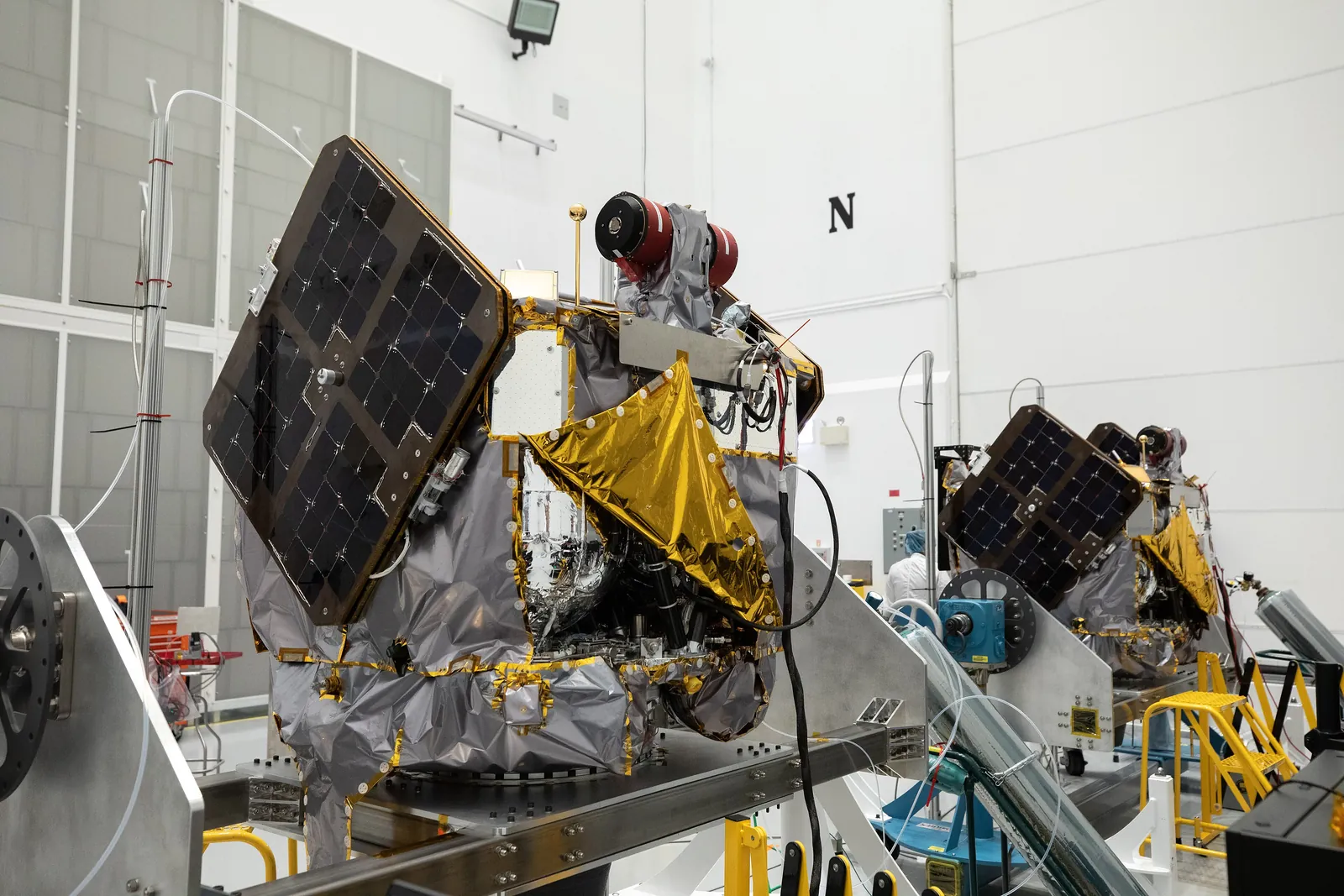
Two identical spacecraft, each about the size of a standard refrigerator, have said their final goodbye to Earth. NASA confirmed on 9 November 2026 that both of its ESCAPADE spacecraft, named Blue and Gold, had completed powered flybys of Earth, skimming past the planet and firing their engines at the moment of closest approach to throw themselves onto a trajectory for Mars. Blue made its pass at about 5 a.m. EST on Saturday 7 November, roughly 1,000 miles above the surface. Gold followed at about 6 a.m. EST on Monday 9 November, closer in, at about 650 miles. Each fired its engine for about nine minutes at closest approach, a burn that raised its speed by more than 1,000 miles per hour, from about 6.3 to about 6.7 miles per second.
“This is the first time NASA has used a powered Earth flyby to propel a spacecraft toward Mars, and we've now executed this maneuver twice, flawlessly, in just two days”
, Asal Naseri, acting associate flight director for the Heliophysics Division at NASA Headquarters
A launch window that did not exist, used anyway
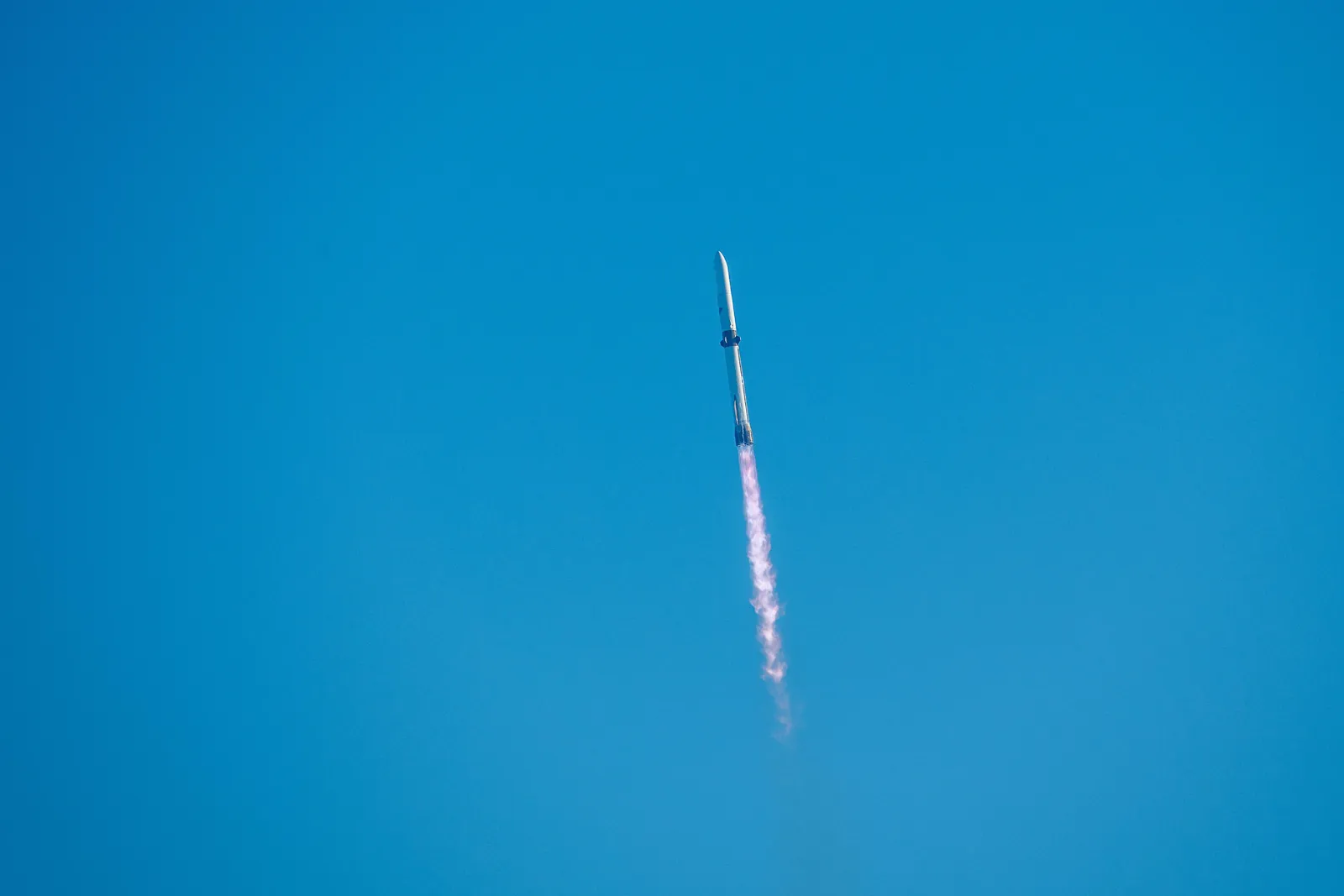
ESCAPADE, short for Escape and Plasma Acceleration and Dynamics Explorers, was never supposed to fly this route. The mission launched on 13 November 2025 aboard Blue Origin’s New Glenn rocket, on that vehicle’s second flight, from Launch Complex 36 at Cape Canaveral Space Force Station in Florida. At launch, Earth and Mars sat on opposite sides of the Sun, the worst possible geometry: Mars missions normally wait for the alignment that recurs roughly every 26 months and fly straight there. ESCAPADE instead spent a year in a kidney-bean-shaped loiter orbit reaching out toward the Sun-Earth Lagrange point 2, about a million miles from Earth, waiting for the planets to line up, and then came back to collect its departure energy from Earth itself.
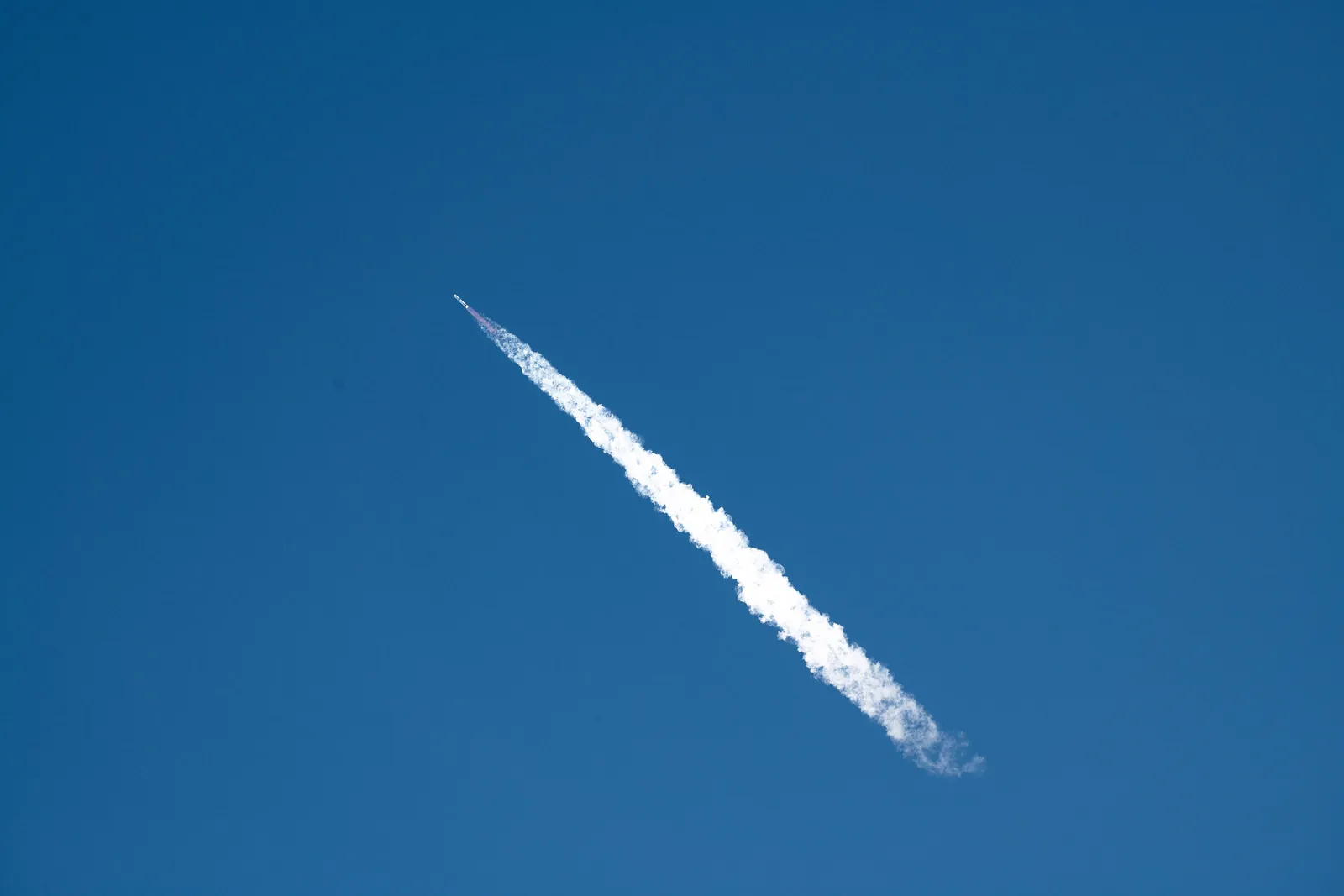
The manoeuvre the twins executed is a powered flyby, sometimes called an Oberth manoeuvre: a gravity assist combined with an engine burn at the point of closest approach, where the burn buys the most energy. NASA states that no Mars-bound spacecraft had successfully flown one before. The spacecraft are built on Rocket Lab’s Photon bus, each about 180 kilograms in dry mass, and the mission is led by the University of California, Berkeley’s Space Sciences Laboratory, with Rocket Lab, NASA’s Goddard Space Flight Center, Embry-Riddle Aeronautical University, Advanced Space and Blue Origin as partners. It is funded by NASA’s Heliophysics Division under the SIMPLEx programme for small planetary missions.
“This will be the first science mission to choreograph two orbiters around Mars”
, Rob Lillis, ESCAPADE principal investigator, University of California, Berkeley
Ten months out, then a formation of two
Ahead of the twins is a ten-month cruise. Mars orbit insertion burns, of about eleven minutes each, are planned for 7 and 9 September 2027. After several months of orbit shaping, science operations are expected to begin in June 2028. ESCAPADE will then become the first multi-spacecraft mission to fly in formation around Mars. Its subject is the solar wind, the million-mile-per-hour stream of material flowing from the Sun, and how that stream interacts with the Martian environment and strips the planet’s atmosphere away.
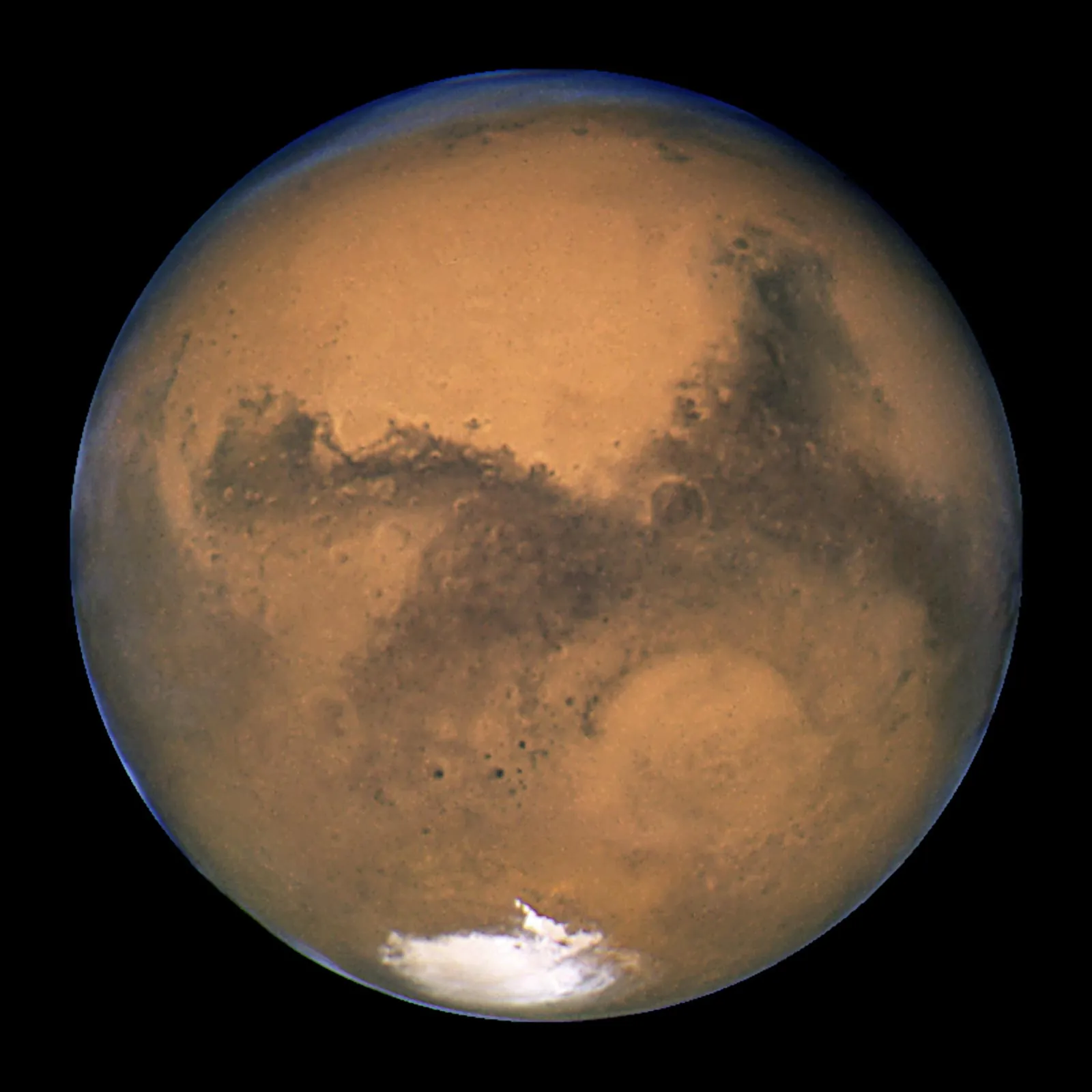
The choreography runs in two campaigns. First, both spacecraft fly the same orbit, a string-of-pearls formation that lets them measure the same region at slightly different times. Six months later they separate into different orbits, one ranging farther out to sample the incoming solar wind while the other stays close to Mars and records the planet’s response in real time, a paired measurement no single orbiter can make. The loiter year was not wasted time either: on its repeated passes through Earth’s distant magnetotail, a region NASA says no spacecraft had directly explored before, ESCAPADE was already returning science.
The disruption here is logistical, and it is large. A Mars route that begins with a year of patience and a powered slingshot frees mission designers from the tyranny of the 26-month window: spacecraft can launch when they are ready, wait in deep space, and depart when the planets allow. ESCAPADE is a small, comparatively inexpensive mission flying two refrigerator-sized orbiters. If its route works end to end, the queue for Mars gets considerably less crowded.
Keep reading
More from the filing cabinet.
Technology · Explainer · Europe · Switzerland
Two Tubes, No Signals, 2,300 Metres of Rock: How the Gotthard Base Tunnel Works
At 57 kilometres the Gotthard Base Tunnel is the longest railway tunnel on Earth, and the flattest way through the Alps. Its design is two one-way tubes, a cross passage every 325 metres, and a safety system built around the tube that is not on fire.
Technology · Explainer · Global · Sun-Earth L2
A Telescope That Unfolds: How the James Webb Space Telescope Works
Webb’s mirror is too big for any rocket, its sunshield is the size of a tennis court, and it must stay colder than deep winter in space to see the first galaxies. The engineering, fold by fold.
Science · Retrospective · North America · United States
Pinpoint: Apollo 12, Struck by Lightning, Landed Within a Short Walk of a Robot
In November 1969 Apollo 12 launched into a rainstorm, was struck by lightning twice in the first minute, and still landed on the Moon 163 metres from the Surveyor 3 lander. Apollo’s second landing was the one that proved it could choose its spot.