
DISRUPTIVE / SCIENCE / NEWS
FILE Nº 038
Science · News
A Billion Objects, 1.7 Petabytes: Euclid Drops the Foundation of Its 3D Map of the Universe
ESA’s Euclid telescope has released its first major batch of data: about 13 months of observations over 1,900 square degrees, capturing more than 900 million galaxies, and covering only 14 percent of the sky the mission will survey.
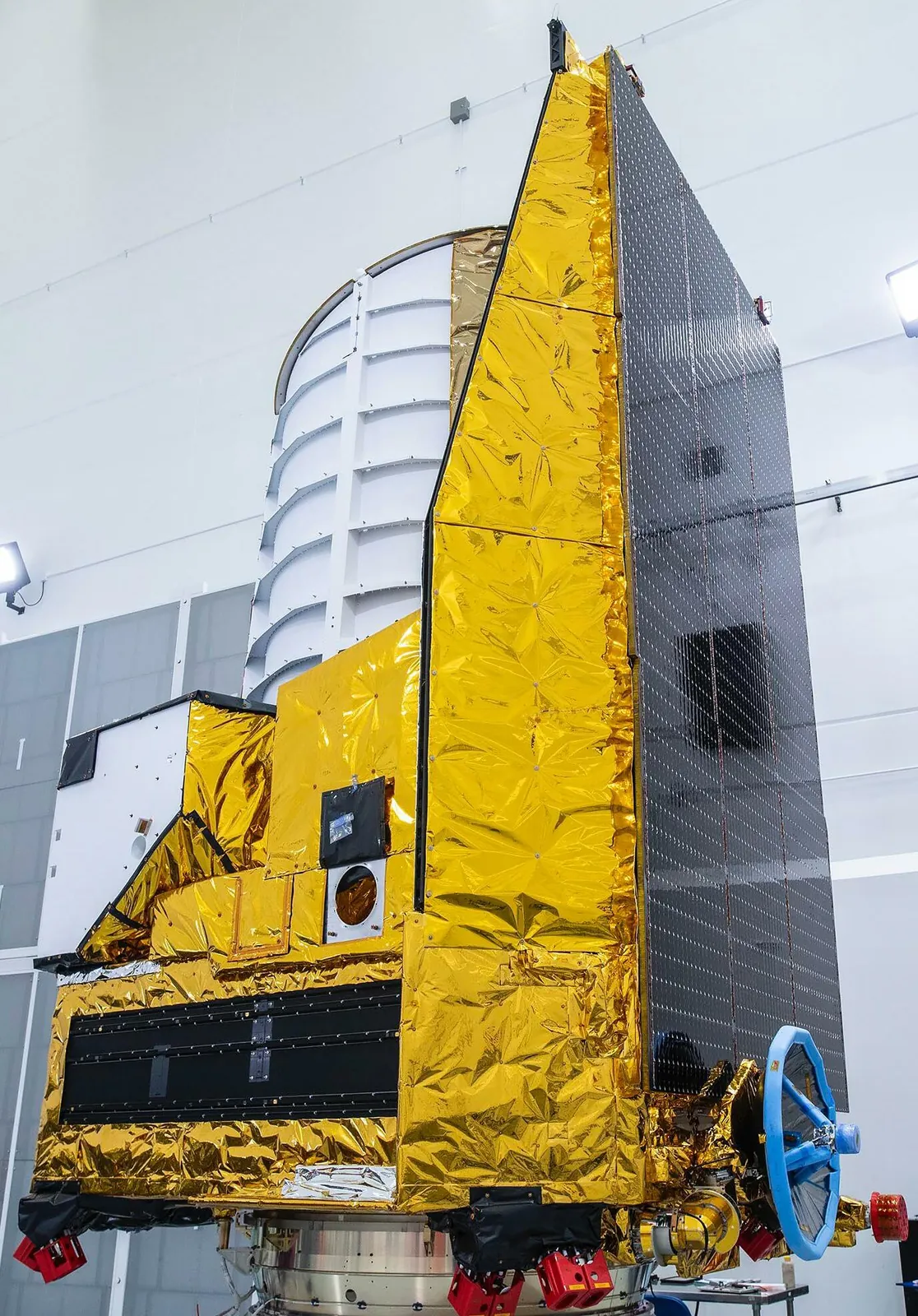
The European Space Agency released the first major batch of data from its Euclid space telescope on 12 November 2026, a release the agency calls DR1-Foundation. It is built from about 13 months of observations and covers 1,900 square degrees of sky, an area ESA puts at 9,500 full Moons, capturing the light of more than a billion objects. The data volume matches the ambition: 1.7 million gigabytes, 1.7 petabytes of raw data, calibrated images, catalogues and spectra, now open to researchers.
What is inside the release
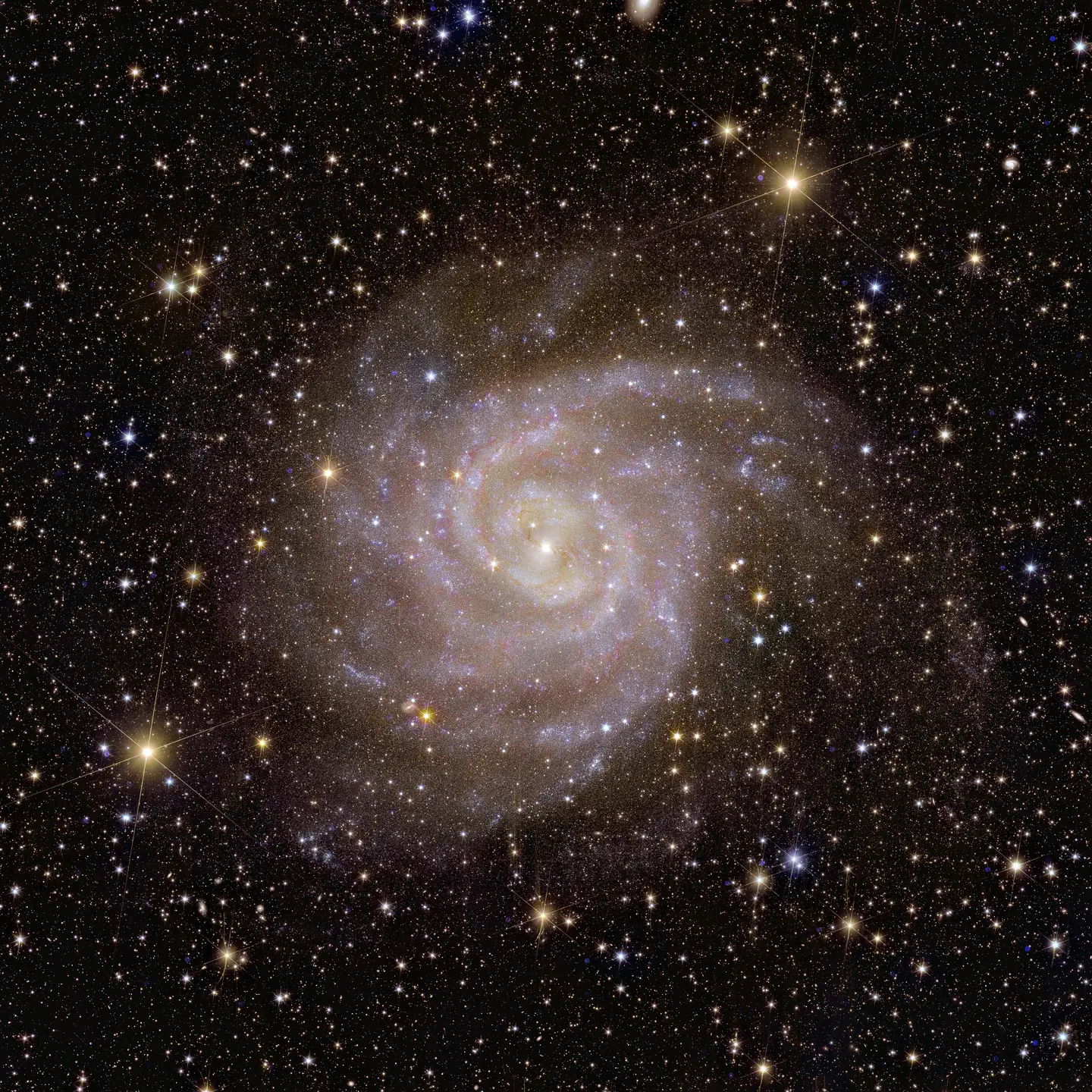
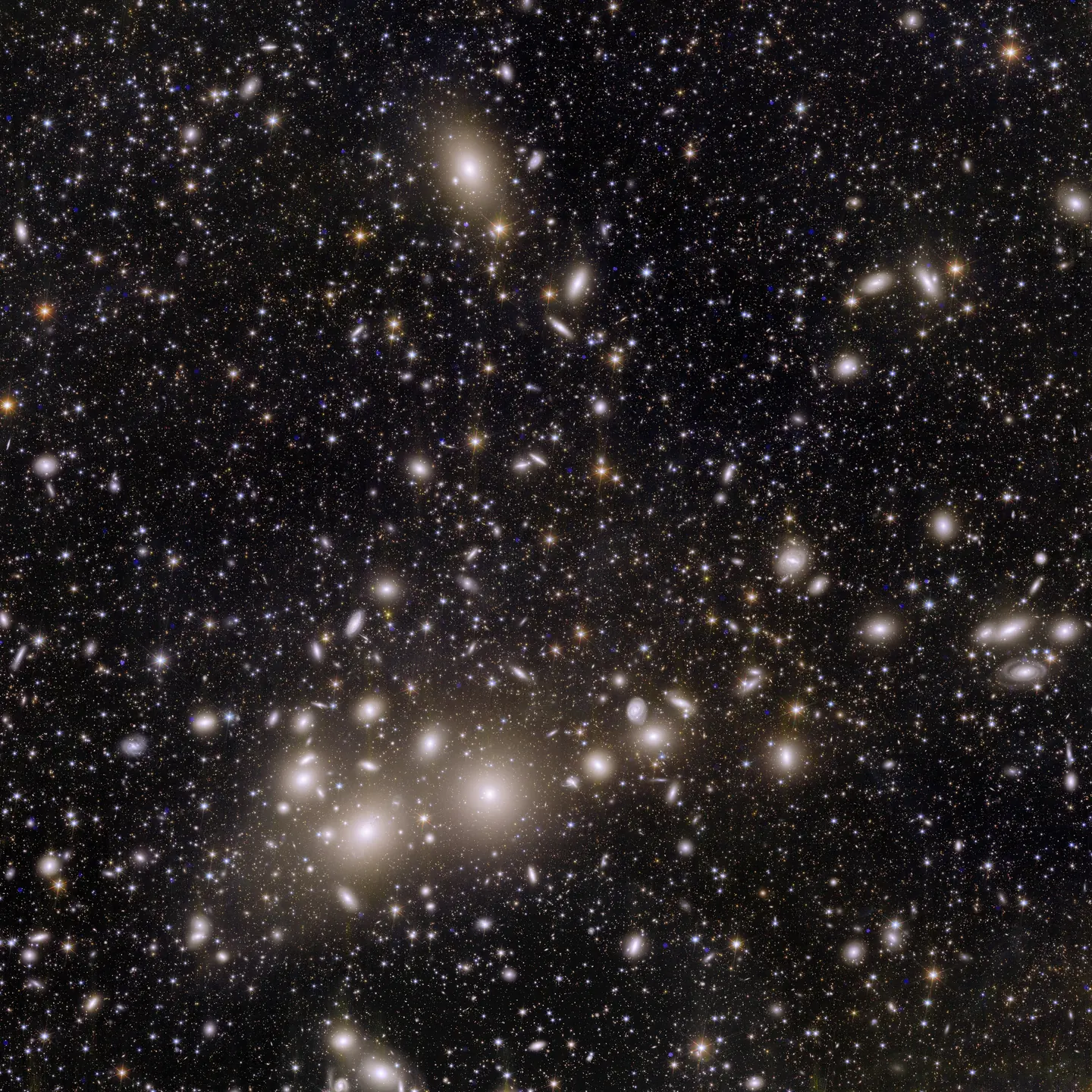
The headline contents are counts on a scale astronomy has not previously had to handle in a single release. More than 900 million galaxies are catalogued. Around 15,000 strong gravitational lensing candidates are identified, which ESA describes as the largest strong-lens catalogue ever assembled, larger than all previous catalogues combined: each candidate is a foreground galaxy whose gravity bends the light of a background galaxy into arcs, a natural telescope and a weighing scale for dark matter in one. More than 60 million quasar candidates are listed, and spectra are included for more than 160 million sources.
“This major Euclid data release represents the largest space-based survey of its kind, laying the foundation of future discovery in a new regime for astronomy and demonstrating the excellence of European technology, science and international collaboration”
, Carole Mundell, ESA Director of Science
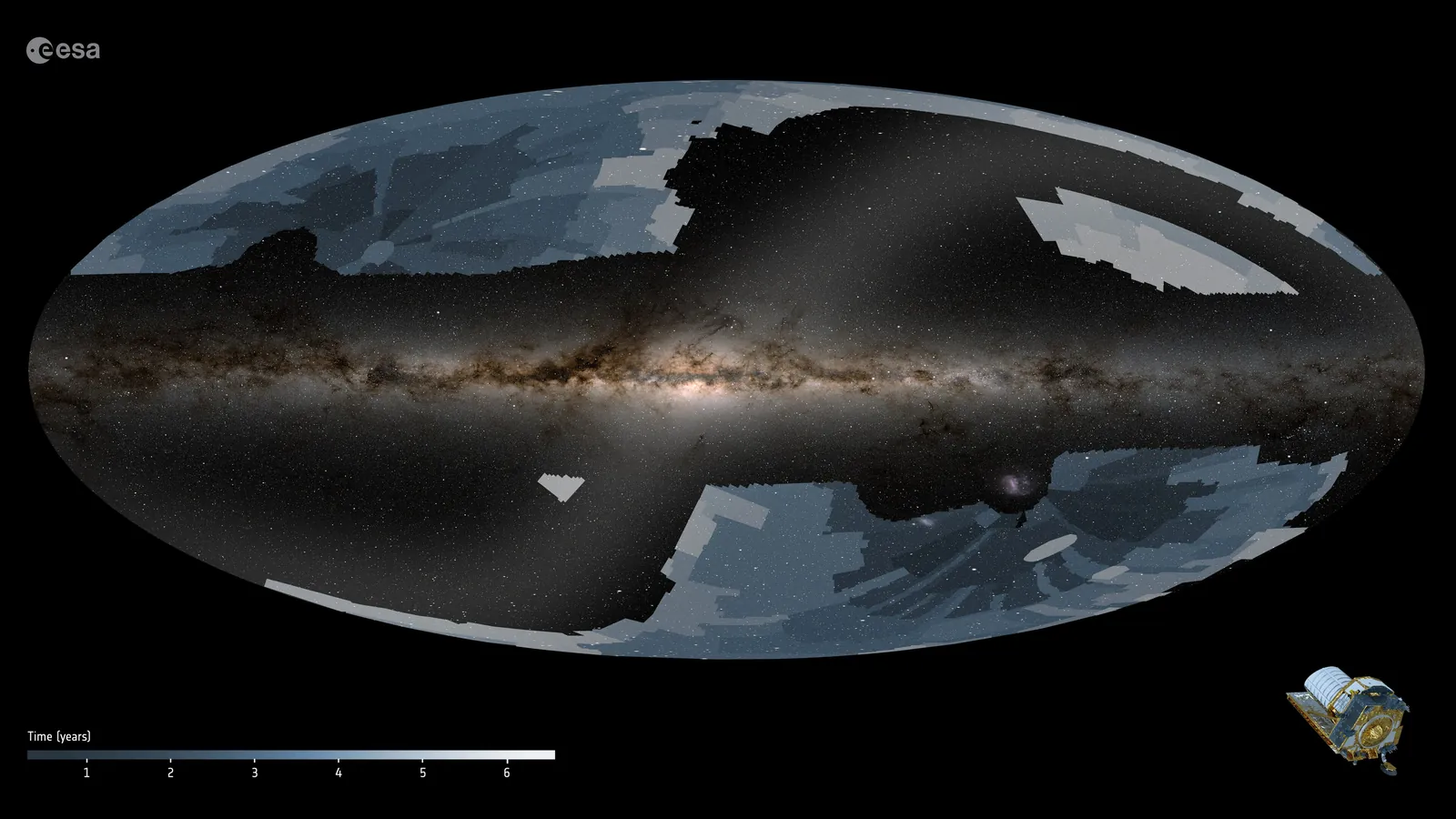
For all its size, DR1-Foundation is a beginning. The dataset covers about 14 percent of the total sky area Euclid will survey. The complete first data release follows in mid-2027 and adds the higher-level products the mission was built for: weak gravitational lensing measurements, which map dark matter by its subtle distortion of galaxy shapes, and galaxy clustering analysis, which traces the cosmic web in three dimensions.
A detective built for two invisible suspects
Euclid exists to investigate the dark Universe: how the Universe has expanded, how its large-scale structure formed, and what roles gravity, dark energy and dark matter play in that history. Its method is cartography at unprecedented scale. Over a nominal six-year mission it will chart billions of galaxies, some as far as 10 billion light-years away, spanning over a third of the sky, in what will be the largest three-dimensional map of the cosmos ever attempted. The telescope carries a 1.2-metre mirror feeding two instruments: VIS, a visible-light camera, and NISP, a near-infrared spectrometer and photometer.
The spacecraft launched on 1 July 2023 aboard a SpaceX Falcon 9 from Cape Canaveral, Florida, and works from an orbit around the Sun-Earth Lagrange point 2, 1.5 million kilometres from Earth, where its view is unobstructed and its temperature stable. Routine science observations began on 14 February 2024. Euclid is an ESA mission built and operated by the agency with contributions from its member states and NASA, and with the Euclid Consortium providing the instruments and the scientific data analysis.
The disruption in this release is not a single discovery; it is the arrival of survey astronomy at industrial scale. A catalogue of 900 million galaxies, 15,000 gravitational lenses and spectra for 160 million sources is a dataset that researchers will mine for years, and it represents about one seventh of what the mission will eventually survey. The foundation, as ESA named it, is poured. The map itself is still being drawn.
Keep reading
More from the filing cabinet.
Technology · Explainer · Global · Sun-Earth L2
A Telescope That Unfolds: How the James Webb Space Telescope Works
Webb’s mirror is too big for any rocket, its sunshield is the size of a tennis court, and it must stay colder than deep winter in space to see the first galaxies. The engineering, fold by fold.
Science · Retrospective · North America · United States
Pinpoint: Apollo 12, Struck by Lightning, Landed Within a Short Walk of a Robot
In November 1969 Apollo 12 launched into a rainstorm, was struck by lightning twice in the first minute, and still landed on the Moon 163 metres from the Surveyor 3 lander. Apollo’s second landing was the one that proved it could choose its spot.
Technology · News · Europe · Dresden, Germany
Dresden’s Billion-Euro Bet on Chips for the Physical World
GlobalFoundries has topped out its €1.1 billion SPRINT fab expansion and unveiled FDX Fusion, a chip platform designed for what the industry now calls Physical AI.