
DISRUPTIVE / TECHNOLOGY / NEWS
FILE Nº 032
Technology · News
Driverless to Bankstown: Sydney’s 130-Year-Old Railway Becomes a Metro
The first driverless train left Bankstown at 4:31am on 30 October, closing a 25-month conversion of the former T3 Bankstown Line and completing Sydney’s 66-kilometre M1 metro from Tallawong to Bankstown.
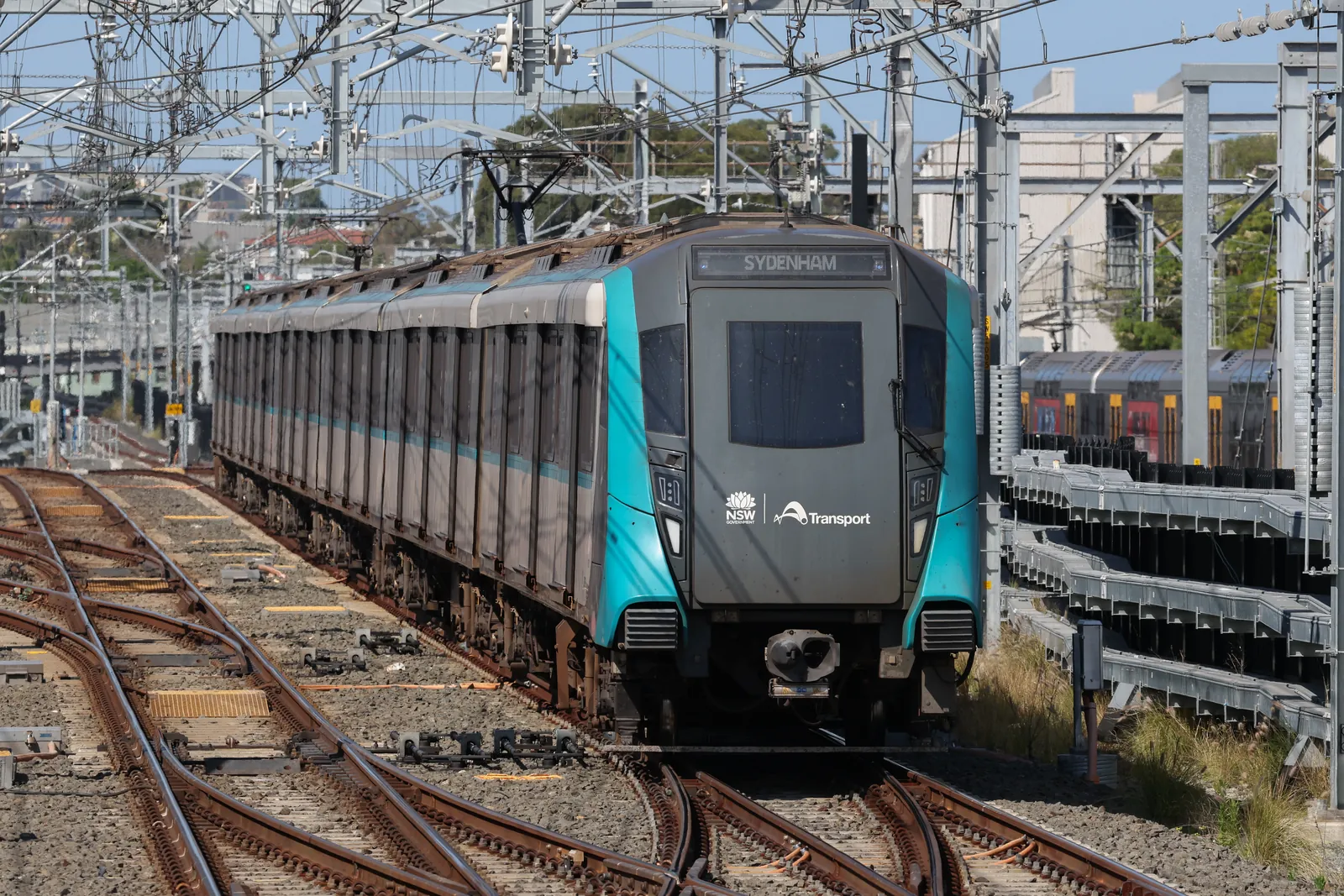
The first passenger train of Sydney’s Southwest Metro departed Bankstown Station at 4:31am on Friday 30 October 2026, with hundreds of passengers lining the platform before dawn to board it. The train was Set 29, and its run to Tallawong via the city centre, 66 kilometres in about 80 minutes, was the first revenue service on a railway that had carried steam, then electric suburban trains, since the nineteenth century.
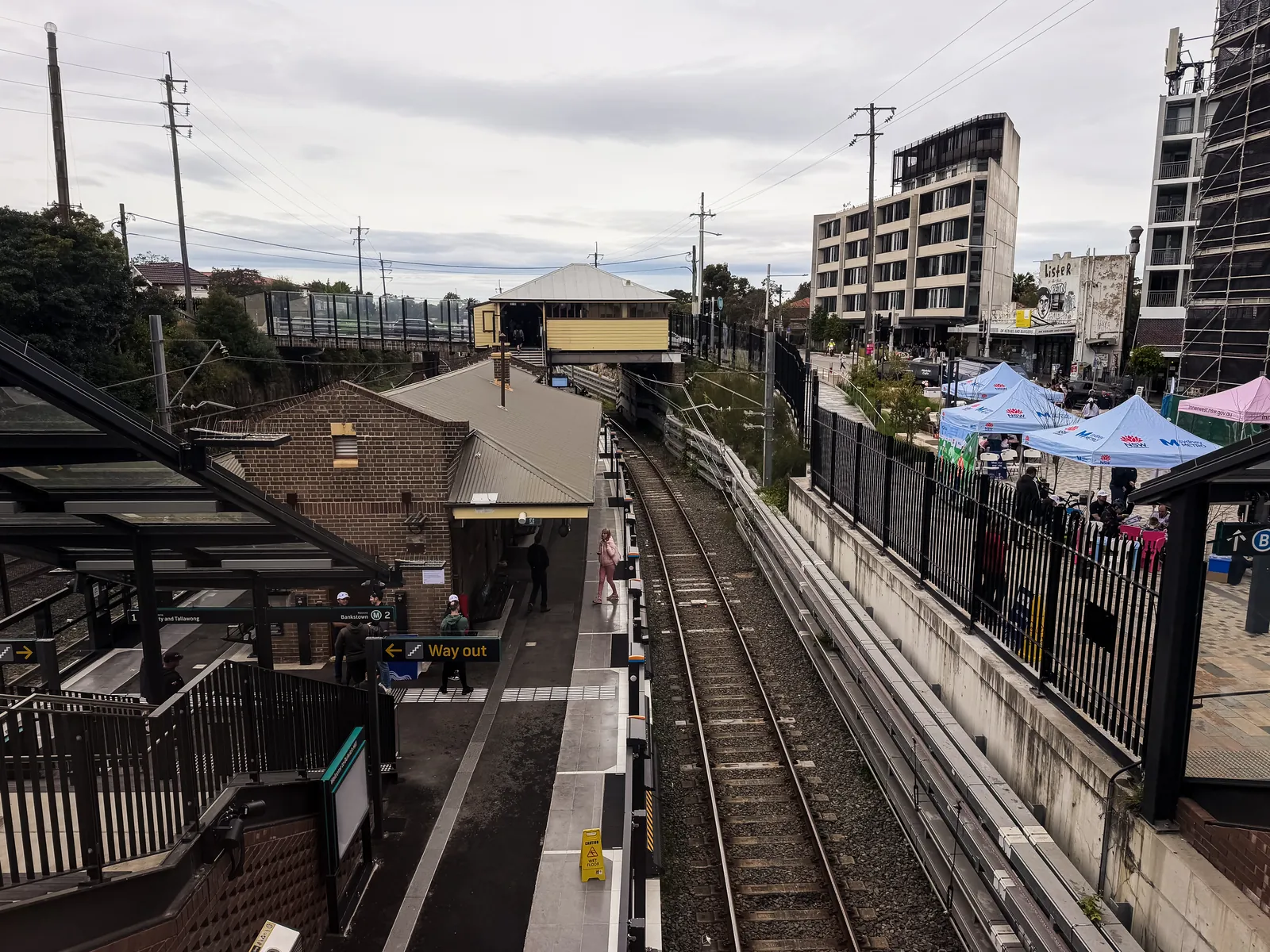
What opened is the final section of Sydney Metro City & Southwest: 13 kilometres of the former T3 Bankstown Line between Sydenham and Bankstown, rebuilt for fully automated driverless operation. Ten stations were upgraded along the section: Marrickville, Dulwich Hill, Hurlstone Park, Canterbury, Campsie, Belmore, Lakemba, Wiley Park, Punchbowl and Bankstown. The opening completes the M1 Metro North West & Bankstown Line as one continuous railway of 66 kilometres and 31 stations.
“This is a huge day for southwest Sydney, finally the wait for the Metro is over”
, Chris Minns, Premier of New South Wales
A railway from 1895, rebuilt in place
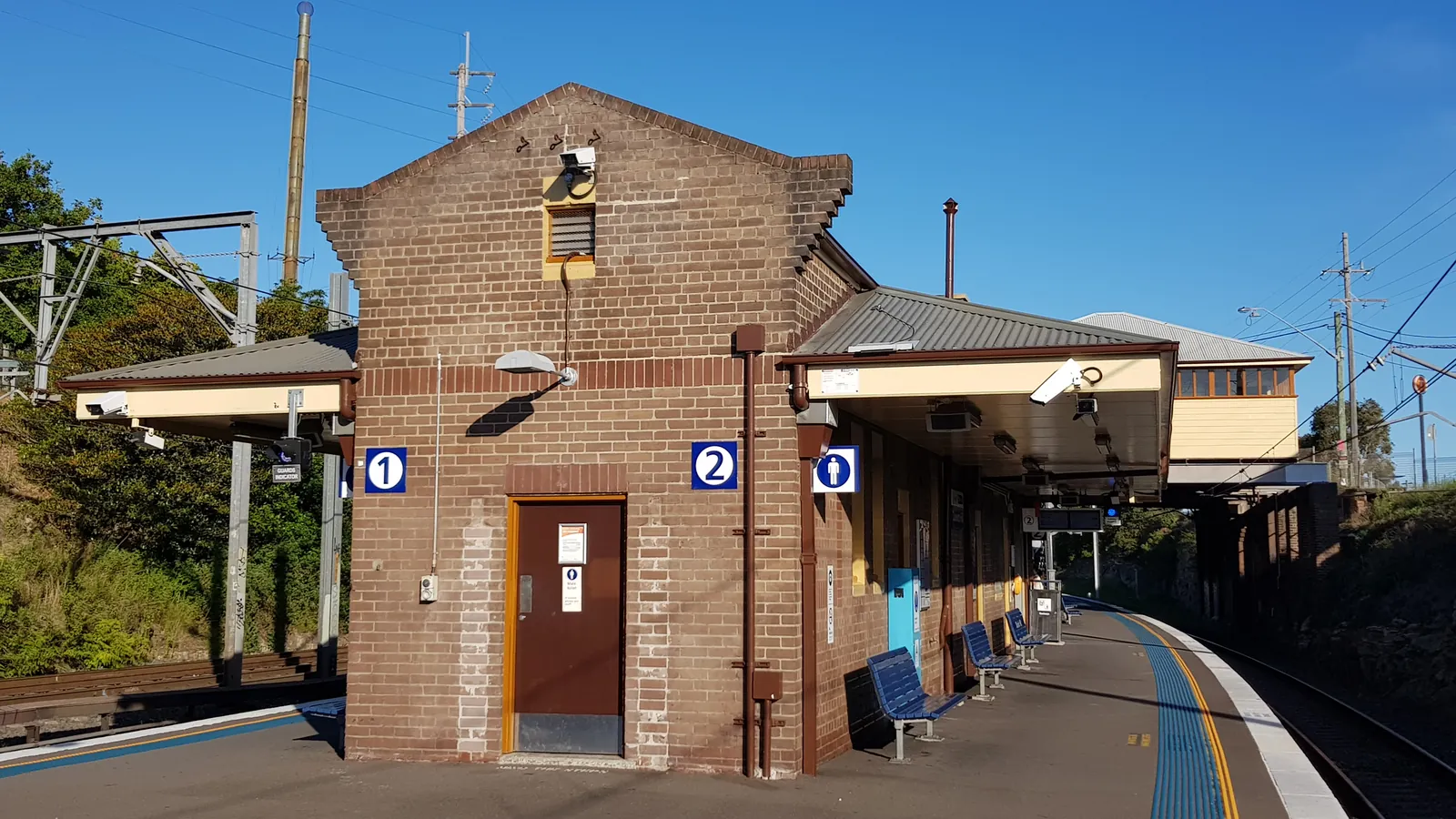
The Bankstown line first opened between Sydenham and Belmore on 1 February 1895 and reached Bankstown on 14 April 1909. The New South Wales Government describes the project as the conversion of a 130-year-old heavy rail line and its heritage stations to modern automated metro standards, a retrofit it calls one of the most complex rail transformation projects in the world. The converted section is segregated from the Sydney Trains network, its stations fitted with platform screen doors, 360 of them across the section, and with mechanical gap fillers where the old curved platforms meet the new trains. Every station on the section is now lift-accessible.
Getting there took far longer than planned. Heavy rail services ended on 30 September 2024, and pink Southwest Link buses replaced trains for what was expected to be about twelve months. In March 2025 the government pushed completion into 2026, citing industrial action that had affected more than 130 days of the programme. The line finally reopened 25 months after it closed. The independent Office of the National Rail Safety Regulator gave final safety approval on 21 October 2026, and the opening date was confirmed the following day, after more than 30,000 kilometres of testing and more than 6,000 timetabled test runs.
Four minutes apart, half as crowded again
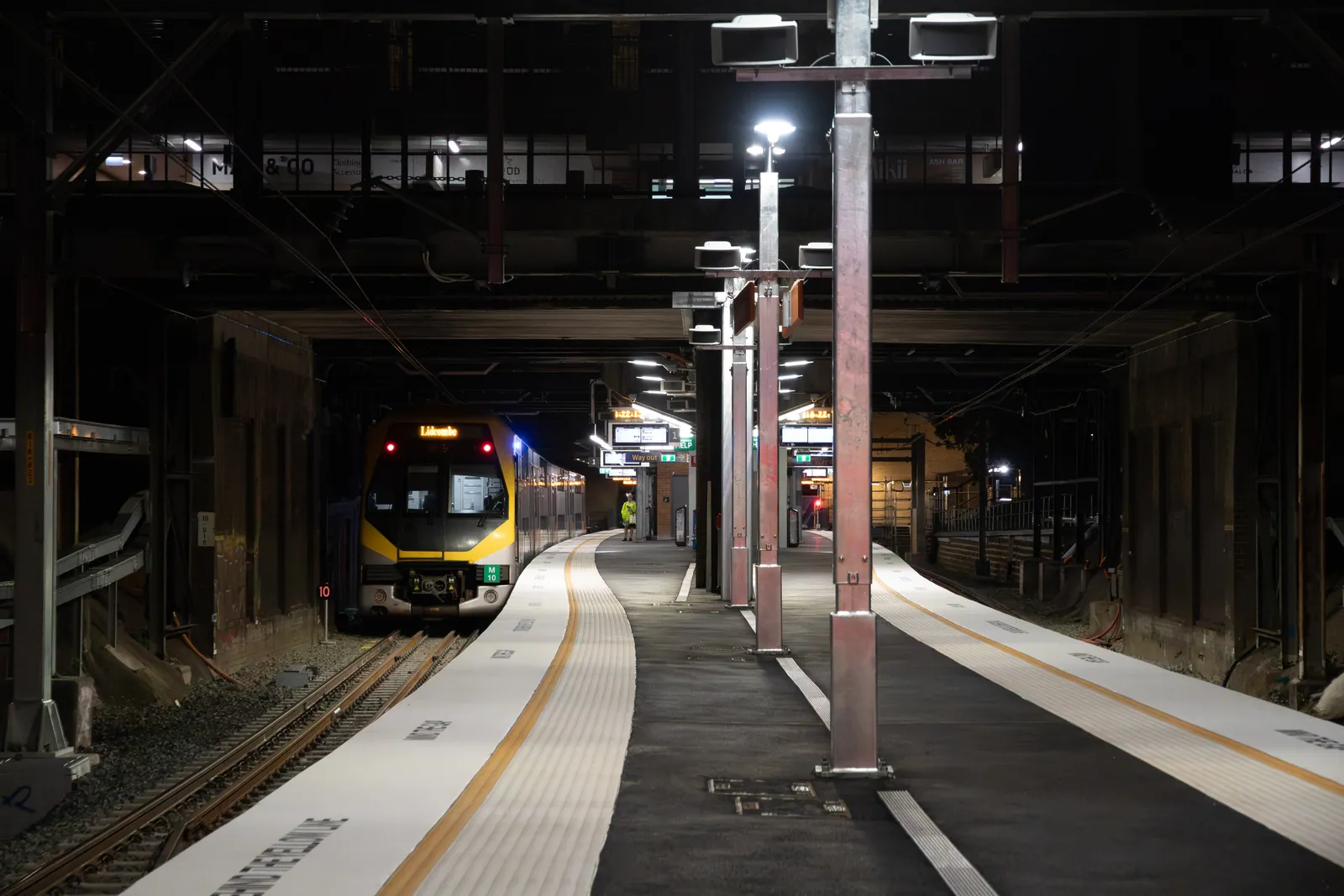
Services run every four minutes in the weekday peak, every five minutes through the middle of the day, and at ten-minute intervals after dark and across the weekend, more than 2,600 driverless services a week across the M1. The government puts the gain at 50 percent more capacity than the old T3 line, and Sydney Metro’s peak figure is 17,000 people per hour in each direction at the four-minute headway. The published journey times show where the minutes come from: Marrickville to Gadigal in the city takes 12 minutes, a saving of 16; Punchbowl to Barangaroo takes 32 minutes, a saving of 24; Bankstown to Macquarie University takes 54 minutes, a saving of 25; and Bankstown to Central takes 28 minutes, six minutes faster than the old service. West of Bankstown, nothing changes: Sydney Trains continues to run the line toward Lidcombe and Liverpool, now branded T6.
“This was the moment patience turned to jubilation”
, John Graham, NSW Minister for Transport
The disruption in this story is not the driverless train, which Sydney has run in its north-west since 2019. It is the proof of method: a working Victorian railway, threaded through dense suburbs that could not lose it for long, taken apart and rebuilt to a different technological standard while its passengers waited on buses. Every future conversion argument, in Sydney and elsewhere, now has a worked example, including an honest account of what the delay cost the people who lived with it.
Keep reading
More from the filing cabinet.
Technology · Explainer · North America · Panama
Lifted by Rainwater: How the Panama Canal’s Locks Raise a Ship 26 Metres, With No Pumps
A ship crossing Panama climbs three lock steps to a lake 26 metres above the sea, floats across, and steps down the other side. The machinery is gates, valves and gravity; the engineering, step by step, in both generations of locks.
Science · Retrospective · North America · United States
Viking at Fifty: The Summer NASA Landed on Mars, Twice, and Asked Whether Anything Lived There
Fifty years ago two identical spacecraft landed on Mars seven weeks apart, returned the first photographs from its surface, and ran the only direct search for life ever flown. The answer they brought back is still being argued with.
Technology · Explainer · Asia · Japan
The Train That Floats on Cold: How Japan’s Superconducting Maglev Works
JR Central’s SCMaglev carries its magnets at minus 269 degrees, floats ten centimetres above its guideway, and holds the world rail speed record at 603 km/h. With the Shizuoka Alps tunnel approved in July 2026, the line it was built for is unblocked at last.