
DISRUPTIVE / TECHNOLOGY / EXPLAINER
FILE Nº 036
Technology · Explainer
The Train That Floats on Cold: How Japan’s Superconducting Maglev Works
JR Central’s SCMaglev carries its magnets at minus 269 degrees, floats ten centimetres above its guideway, and holds the world rail speed record at 603 km/h. With the Shizuoka Alps tunnel approved in July 2026, the line it was built for is unblocked at last.
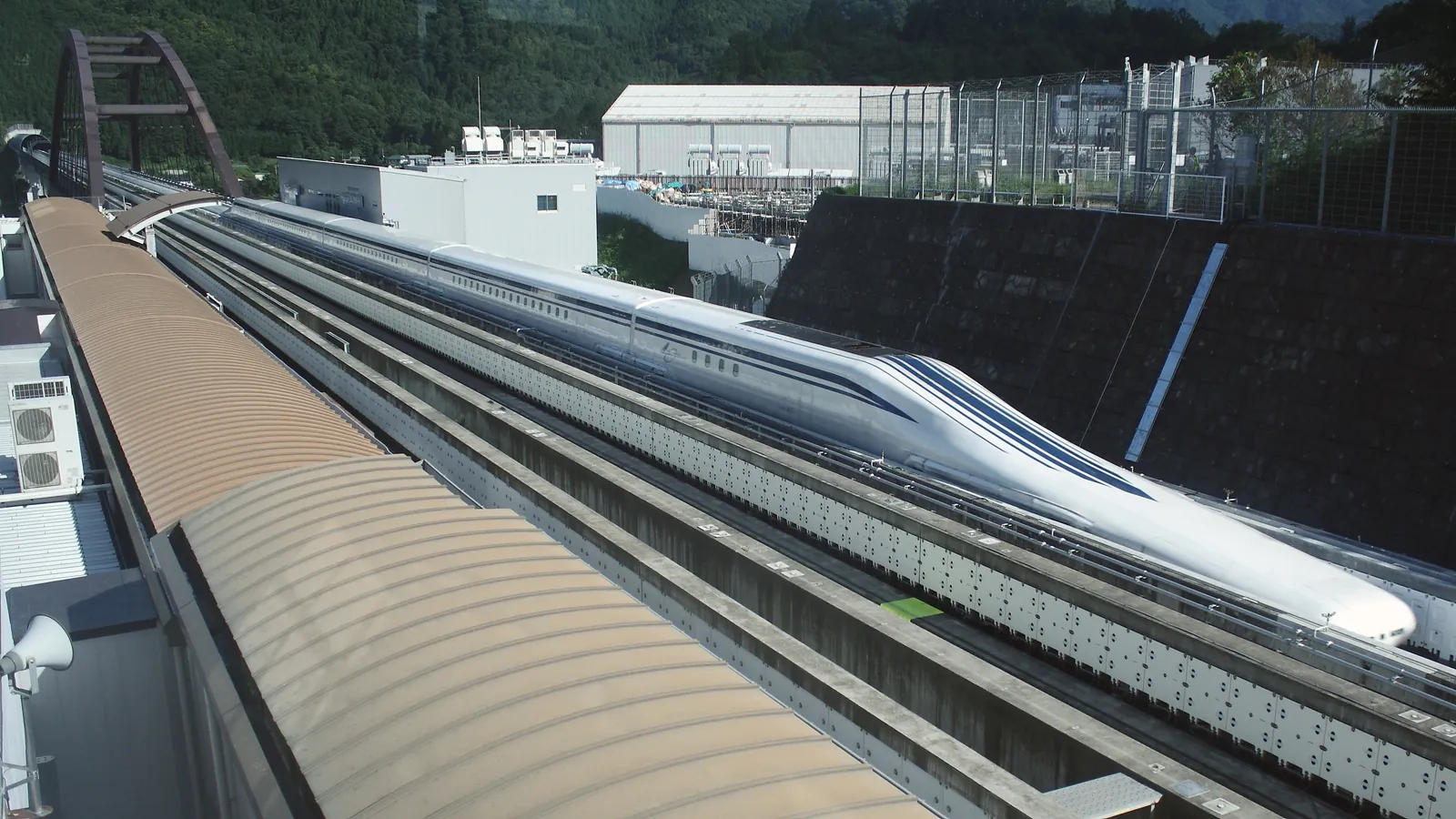
In July 2026, after a nine-year stalemate, the governor of Shizuoka Prefecture approved construction of the Southern Alps tunnel section of the Chuo Shinkansen, the superconducting maglev line JR Central is building between Tokyo and Nagoya. The approval removed the single largest obstacle to the fastest railway technology ever put into commercial construction. This is how that technology works, and why it has taken six decades to reach a start line.
Cold first: the superconducting magnet
Everything about the SCMaglev starts with a coil of niobium-titanium alloy, cooled with liquid helium to minus 269 degrees Celsius. At that temperature the alloy’s electrical resistance falls to effectively zero, so a current fed into the coil circulates almost indefinitely, turning it into a magnet far stronger than any conventional electromagnet of the same weight. JR Central mounts these superconducting magnets, alternating north and south poles, on the bogies of the train. They are the fixed half of every interaction that follows: the guideway, the concrete trough the train runs in, supplies the other half.
How it floats: coils that switch themselves on
Set into both side walls of the guideway are levitation and guidance coils, wound in a figure of eight and cross-connected beneath the track. They carry no power feed. As the train’s superconducting magnets sweep past at speed, they induce a current in the coils, which become electromagnets in response: the arrangement pushes up from below and pulls down from above, in JR Central’s description, and the train rises to where its weight balances the magnetic force, about ten centimetres above the guideway floor. Because the coils are cross-connected, a train that drifts toward one wall induces a correcting force that pushes it back to the centre. The system is electrodynamic, which imposes a discipline: at low speed the induced current is too weak to lift anything, so the train runs on rubber wheels until about 150 km/h, and only then floats.
How it moves: a motor unrolled along the track
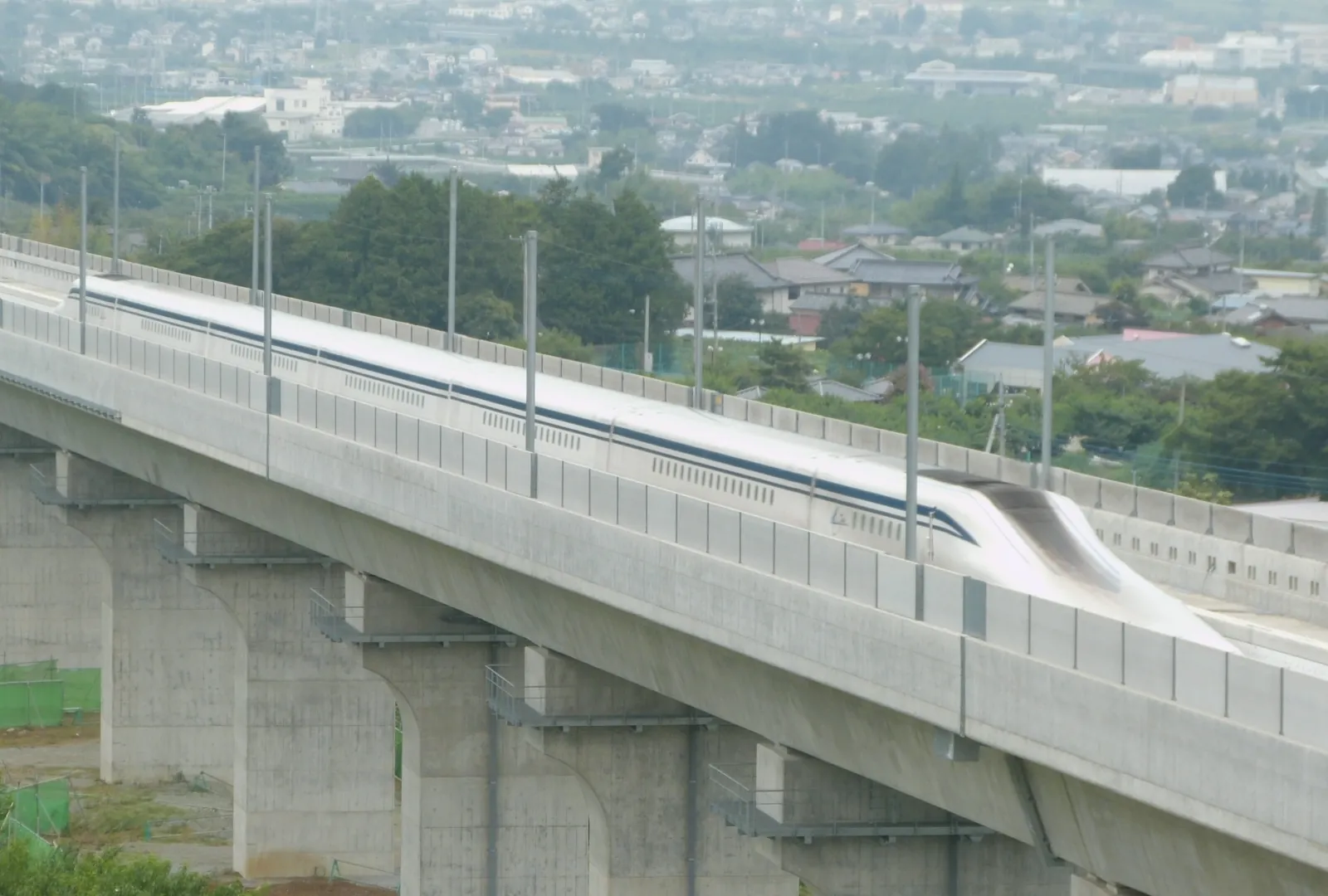
Propulsion comes from a second set of guideway coils, the propulsion coils, fed with alternating current from substations along the line. Their north and south poles are switched electrically in step with the train’s position, so each coil attracts the superconducting magnet approaching it and repels the one that has just passed: a linear synchronous motor, in effect a rotary motor unrolled flat and stretched along the route. Speed is governed by the frequency of the supply. Braking works the same way in reverse, the ground coils’ forces retarding the train without friction. There is no driving cab in the conventional sense either: operation is conducted by remote control, a detail JR Central’s own technical literature notes almost in passing.
The proof: 603 kilometres per hour
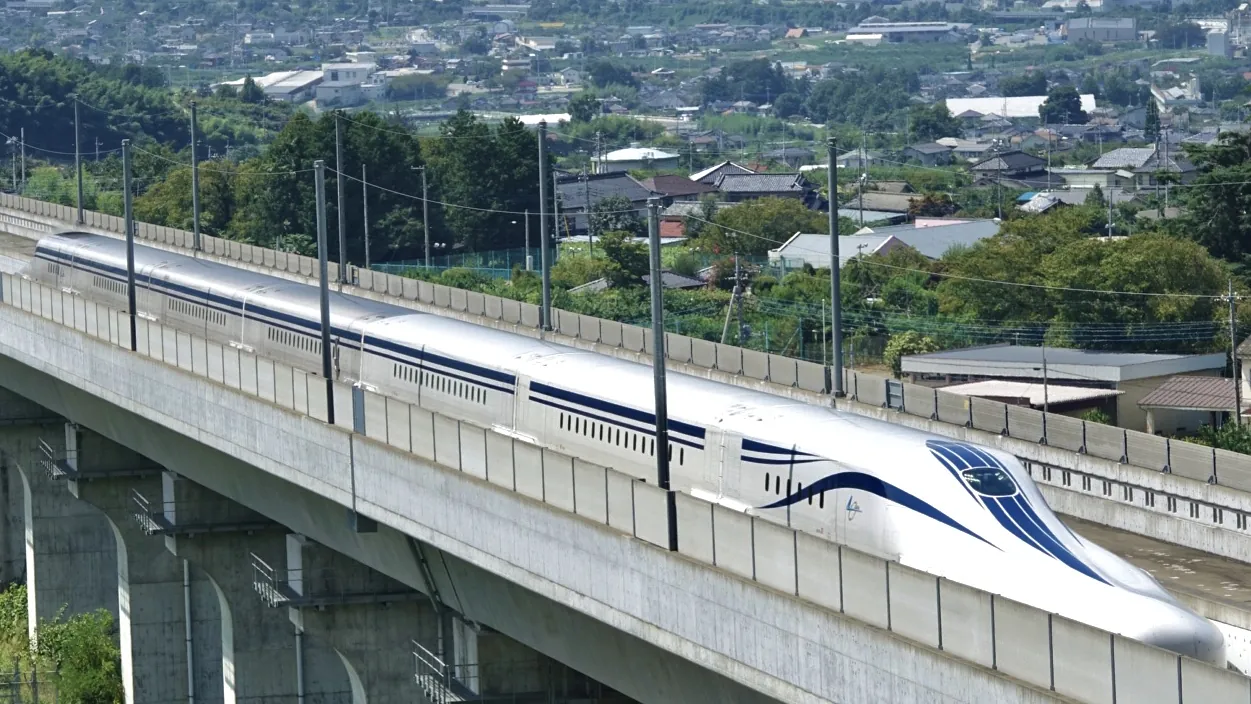
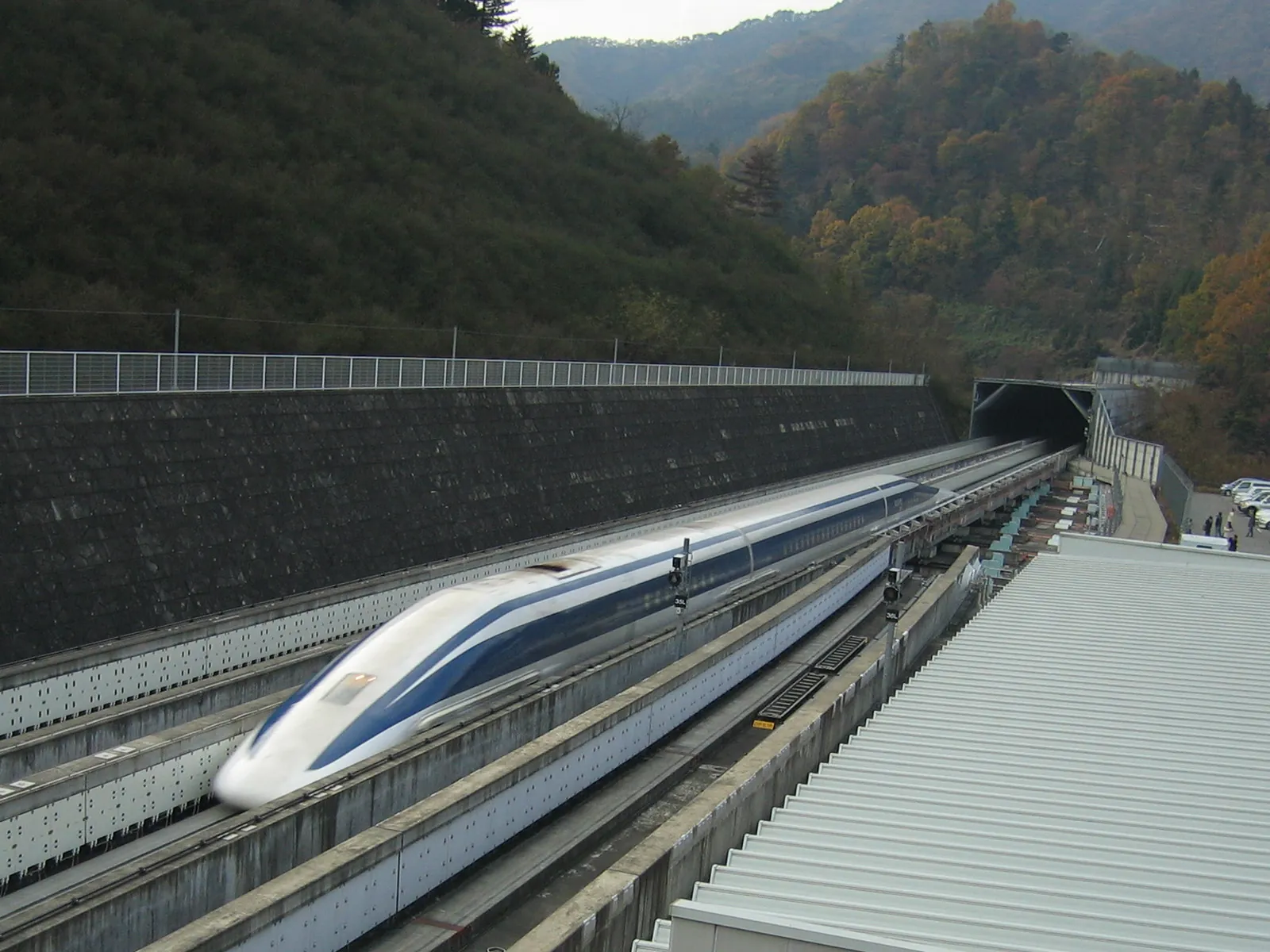
The technology has been running in Yamanashi Prefecture since 1997, on a test line extended in August 2013 to 42.8 kilometres, long enough for sustained high-speed endurance work with the L0 Series trainsets built for the commercial line. On 16 April 2015 a manned seven-car L0 reached 590 km/h, passing the 581 km/h record set by the earlier MLX01 in 2003. Five days later, on 21 April 2015, the same programme ran to 603 km/h, holding more than 600 km/h for 10.8 seconds over 1.8 kilometres, with 49 JR Central employees on board. Guinness World Records certifies the 603 km/h mark as the fastest maglev train speed. Commercial service is planned at a maximum of 500 km/h, a deliberate margin below what the machine has already done.
The line it was built for
The Chuo Shinkansen’s first section runs 286 kilometres from Shinagawa in Tokyo to Nagoya, about 90 percent of it in tunnels or underground, including the deep crossing of the Southern Japanese Alps through Shizuoka Prefecture, which has no station on the line and spent years refusing the tunnel over its effect on the Oi River basin. At 500 km/h the journey is scheduled at 40 minutes, against about 86 minutes for the fastest Tokaido Shinkansen today; a later extension would reach Osaka in 67 minutes. The price has climbed with the delay: the Shinagawa to Nagoya section was costed at about 5.5 trillion yen when construction began in 2014, and the current estimate stands around 11 trillion yen. With Shizuoka’s approval given on 7 July 2026 and an environmental agreement signed, the earliest opening now projected is 2036, nine years after the original 2027 target. The disruption here is measured in patience: a technology proven at 603 km/h in 2015, still a decade from carrying its first paying passenger, because the hardest engineering on the route turned out to be a river, a mountain range and a prefecture’s consent.
Keep reading
More from the filing cabinet.
Innovation · News · North America · United States
Washington’s $350 Million Quantum Wager: From Blueprints to Hardware
DARPA advanced four more companies to the final stage of its Quantum Benchmarking Initiative, while the Pentagon lined up a conditional $150 million loan for PsiQuantum’s factory.
Features · Evergreen · Global · the idea, not a place
What “Disruptive” Actually Means
The word on our masthead has a precise definition, and most people use it wrong. A field guide to Clayton Christensen’s theory, thirty years on.
Technology · Evergreen · Global · the industry, not a place
Moore’s Law at Sixty: What Gordon Moore Actually Predicted
It wasn’t a law, it wasn’t about speed, and the doubling period changed. The most famous prediction in technology, read properly.