
DISRUPTIVE / SCIENCE / RETROSPECTIVE
FILE Nº 041
Science · Retrospective
Pinpoint: Apollo 12, Struck by Lightning, Landed Within a Short Walk of a Robot
In November 1969 Apollo 12 launched into a rainstorm, was struck by lightning twice in the first minute, and still landed on the Moon 163 metres from the Surveyor 3 lander. Apollo’s second landing was the one that proved it could choose its spot.
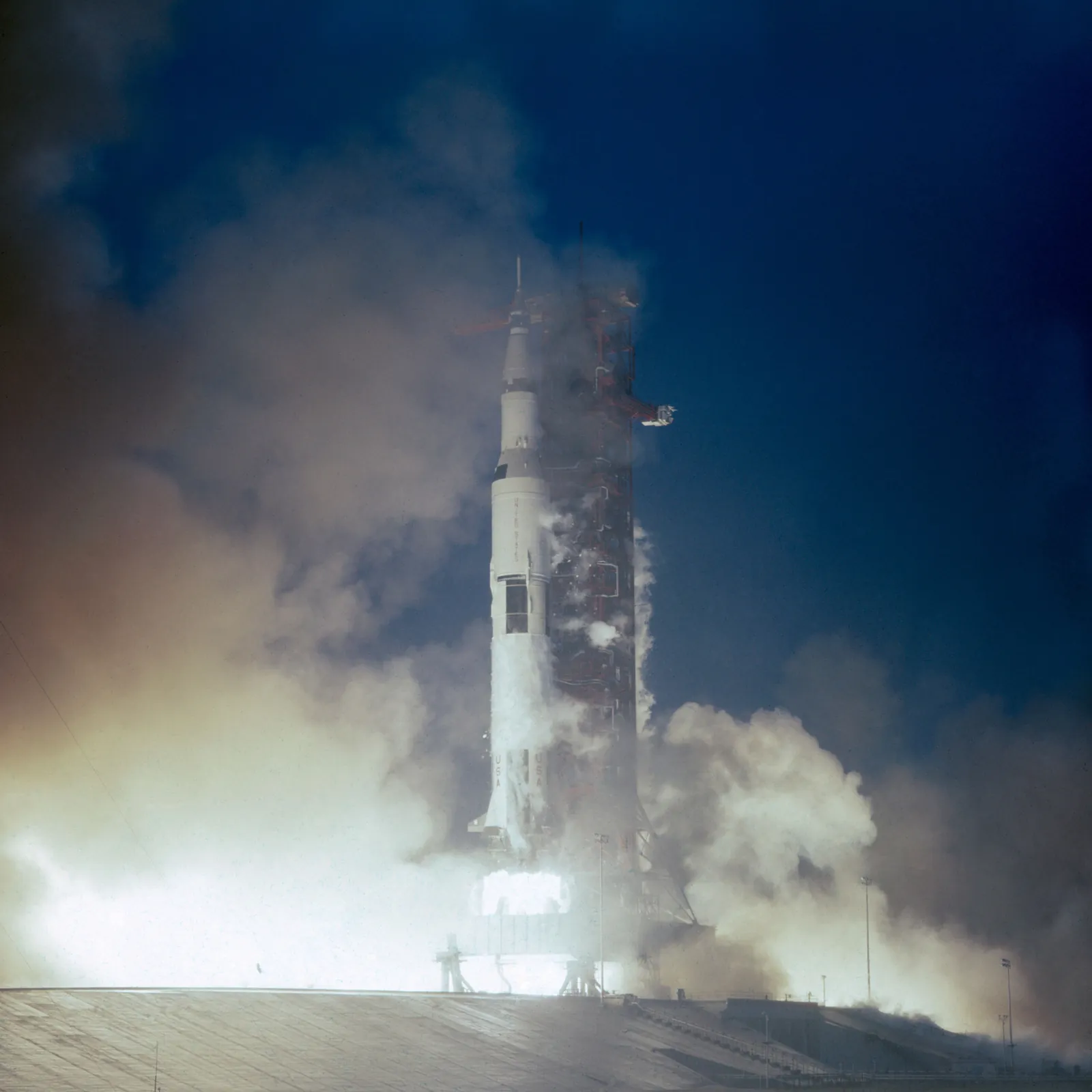
Apollo 11 proved a spacecraft could land on the Moon. Apollo 12, four months later, had the harder brief: prove it could land somewhere in particular. The mission, the sixth crewed Apollo flight and the second lunar landing, launched from Launch Complex 39A at Kennedy Space Center on 14 November 1969 at 16:22 UTC, in rain, the first Saturn V ever launched into a storm. Commander Charles “Pete” Conrad, command module pilot Richard Gordon and lunar module pilot Alan Bean, all United States Navy officers, rode the Saturn V SA-507, with the command module Yankee Clipper and the lunar module Intrepid.
Thirty-six seconds in, the sky struck back
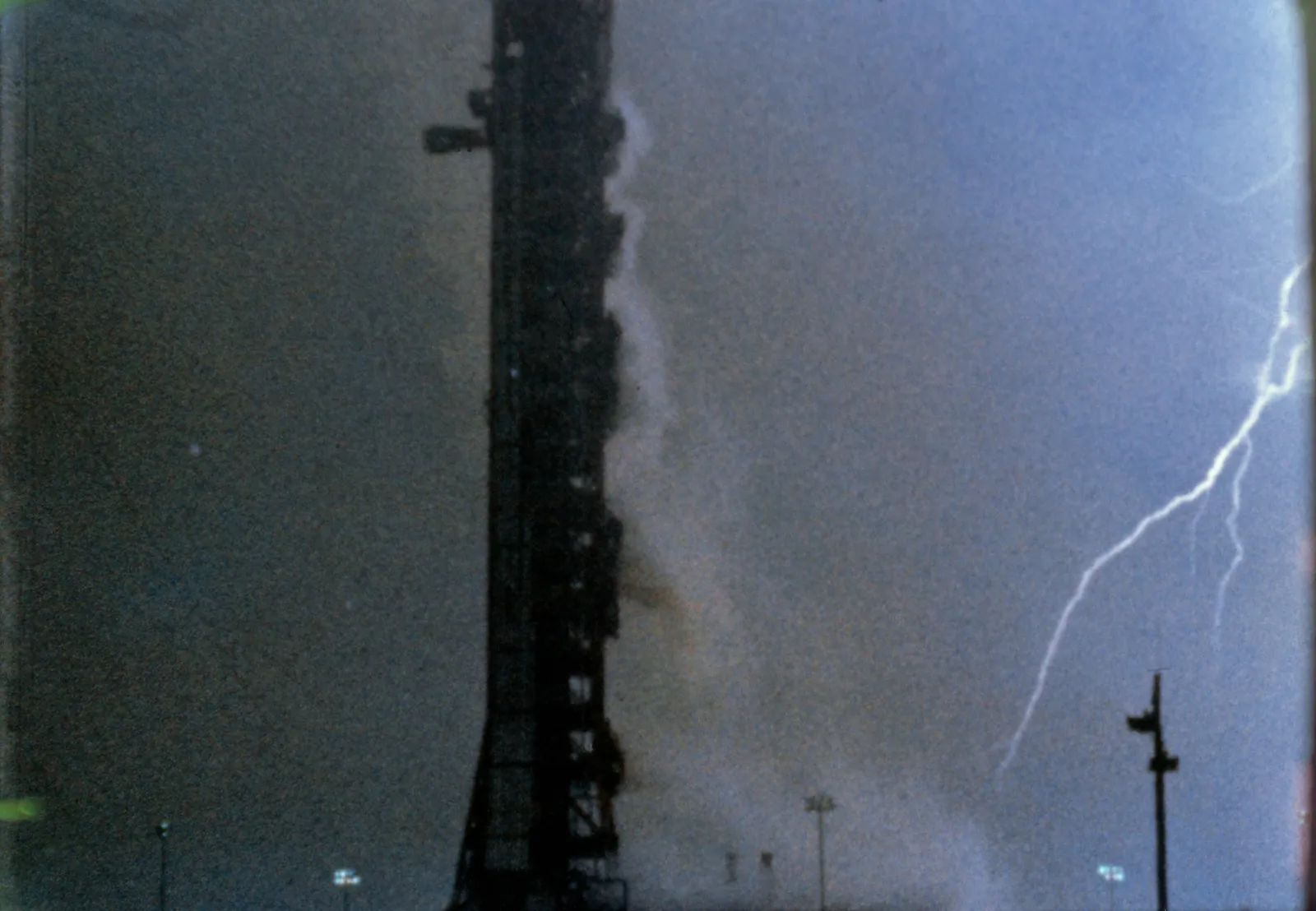
At 36.5 seconds after liftoff, the ascending Saturn V triggered a lightning discharge through itself, down its own ionised exhaust plume to the ground. A second strike followed at 52 seconds. In the spacecraft the effects were alarming: all three fuel cells dropped offline and telemetry garbled, and for a few seconds the crew faced the loss of the mission before it had properly begun. The launch vehicle itself flew on essentially unaffected, power and telemetry were restored, and Apollo 12 continued to orbit. It remains the only crewed launch known to have been struck by lightning, twice, and flown on.
535 feet from a robot that arrived in 1967
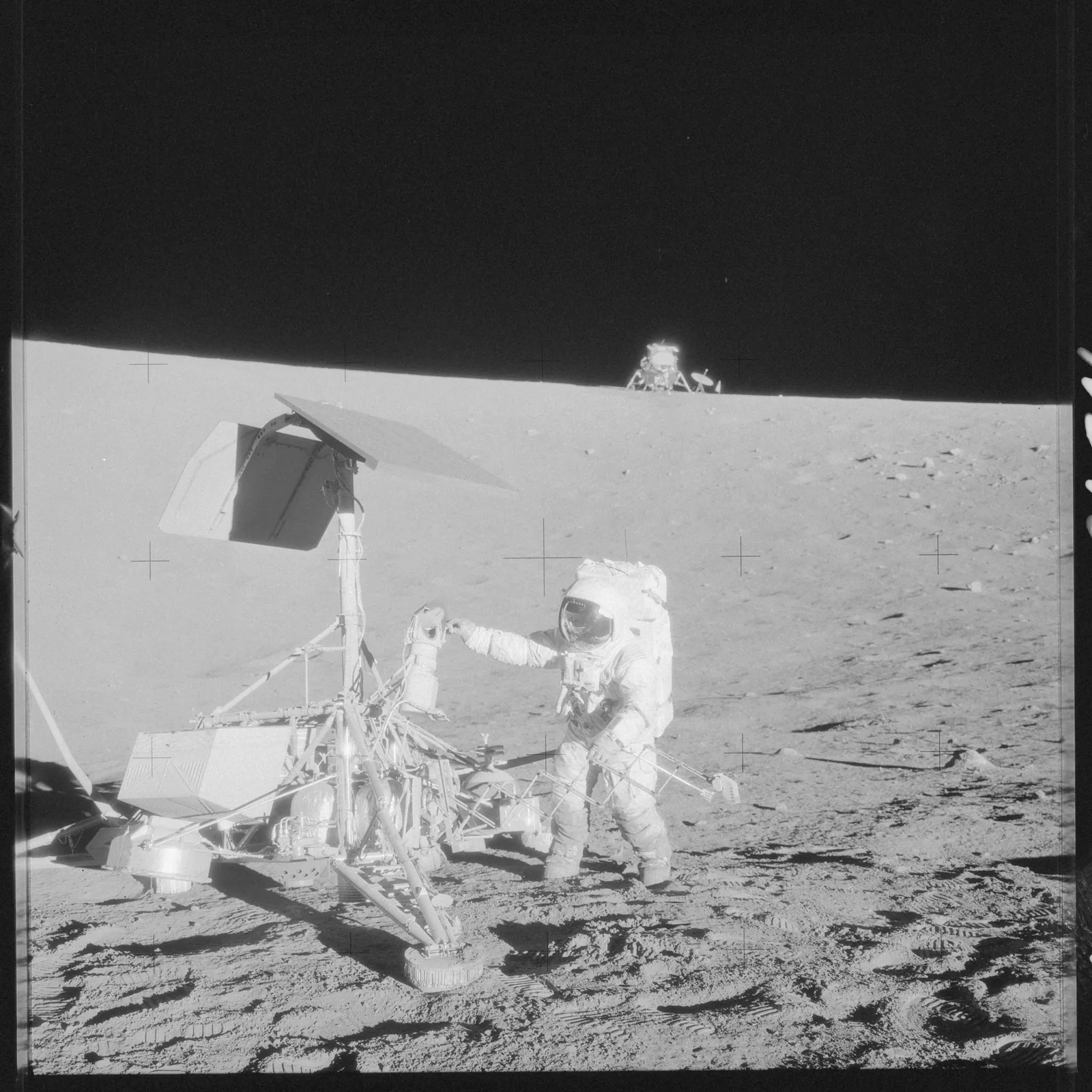
The target was a point in the Ocean of Storms, chosen because something was already there: Surveyor 3, an uncrewed lander that had soft-landed on 20 April 1967. On 19 November 1969, at 06:54 UTC, Conrad flew Intrepid down to a landing at 3.01 degrees south, 23.42 degrees west, just 535 feet, 163 metres, from Surveyor 3. The pinpoint objective, the mission’s central demonstration, was met on the first attempt, close enough that Conrad and Bean could walk to the robot on their second moonwalk, inspect it, and cut parts from it, including its television camera, to bring home. No crew before or since has visited a spacecraft that reached another world ahead of them.
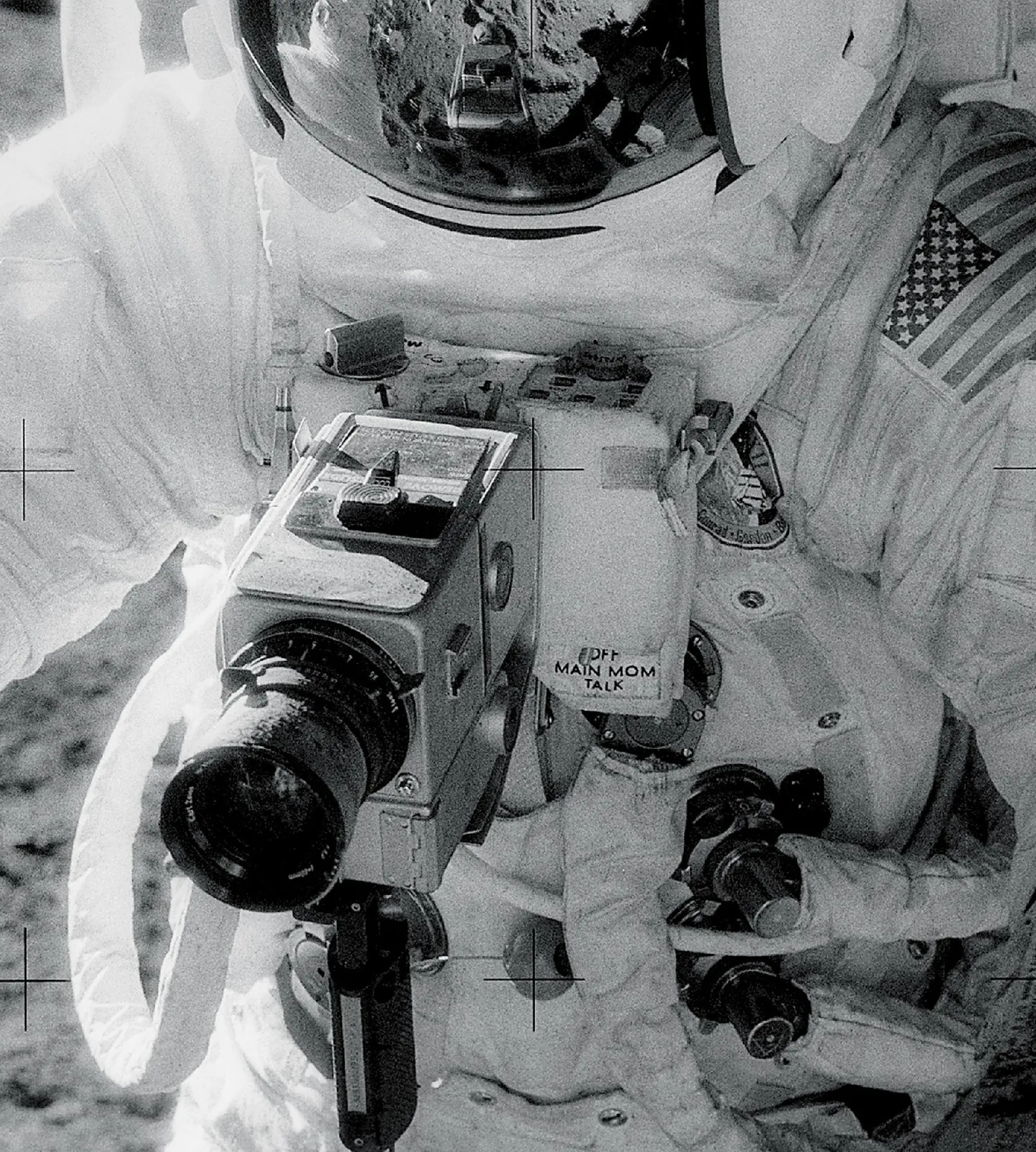
Between the two moonwalks the crew deployed the first full Apollo Lunar Surface Experiments Package, a suite of instruments left running on the surface. After lunar liftoff on 20 November, Intrepid’s ascent stage was deliberately crashed into the Moon as a seismic experiment, its impact ringing through the instruments the crew had just planted. Gordon, who had waited alone in Yankee Clipper, rejoined them for the flight home.
A hard splashdown, and a template
Apollo 12 splashed down in the South Pacific on 24 November 1969 at 20:58 UTC, about 3.9 nautical miles from the recovery ship USS Hornet. It was a hard arrival, roughly 15 g as the capsule struck a rising wave, hard enough to dislodge a 16 mm camera that struck Bean above the eye. The mission had lasted 244 hours, 36 minutes and 25 seconds, ten days in all, 62 seconds longer than planned, by NASA’s account.
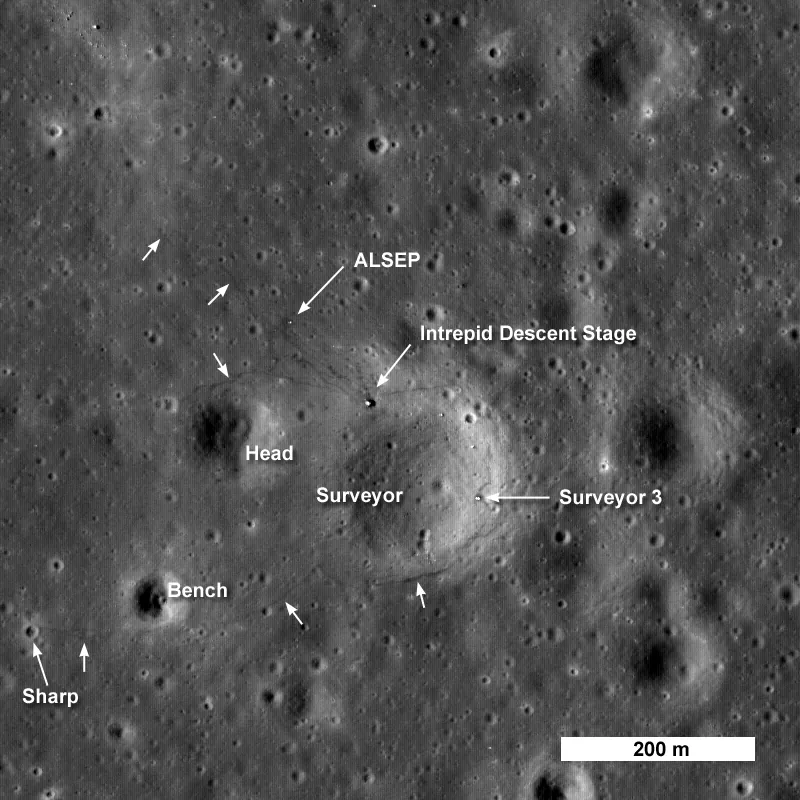
The disruption Apollo 12 worked on the programme was precision. Apollo 11 had landed miles from its target, in a boulder field its commander flew over by hand. Apollo 12 landed within a short walk of a named point on another world, after being struck by lightning on the way up. Every landing that followed, Apollo’s and all the robotic landings since, inherited its standard: the question was no longer whether a spacecraft could reach the surface, but how exactly it could choose the spot where it did.
Keep reading
More from the filing cabinet.
Innovation · News · North America · United States
Washington’s $350 Million Quantum Wager: From Blueprints to Hardware
DARPA advanced four more companies to the final stage of its Quantum Benchmarking Initiative, while the Pentagon lined up a conditional $150 million loan for PsiQuantum’s factory.
Features · Evergreen · Global · the idea, not a place
What “Disruptive” Actually Means
The word on our masthead has a precise definition, and most people use it wrong. A field guide to Clayton Christensen’s theory, thirty years on.
Technology · Evergreen · Global · the industry, not a place
Moore’s Law at Sixty: What Gordon Moore Actually Predicted
It wasn’t a law, it wasn’t about speed, and the doubling period changed. The most famous prediction in technology, read properly.