
DISRUPTIVE / BUSINESS / NEWS
FILE Nº 042
Business · News
Microsoft Takes Intel’s Bridge: EMIB Packaging Comes to Azure Silicon
Under a long-term agreement announced on 17 November, Microsoft becomes the first company to announce it will package its own Azure chips with Intel Foundry’s EMIB bridges, and locks in years of Xeon supply, Diamond Rapids included.
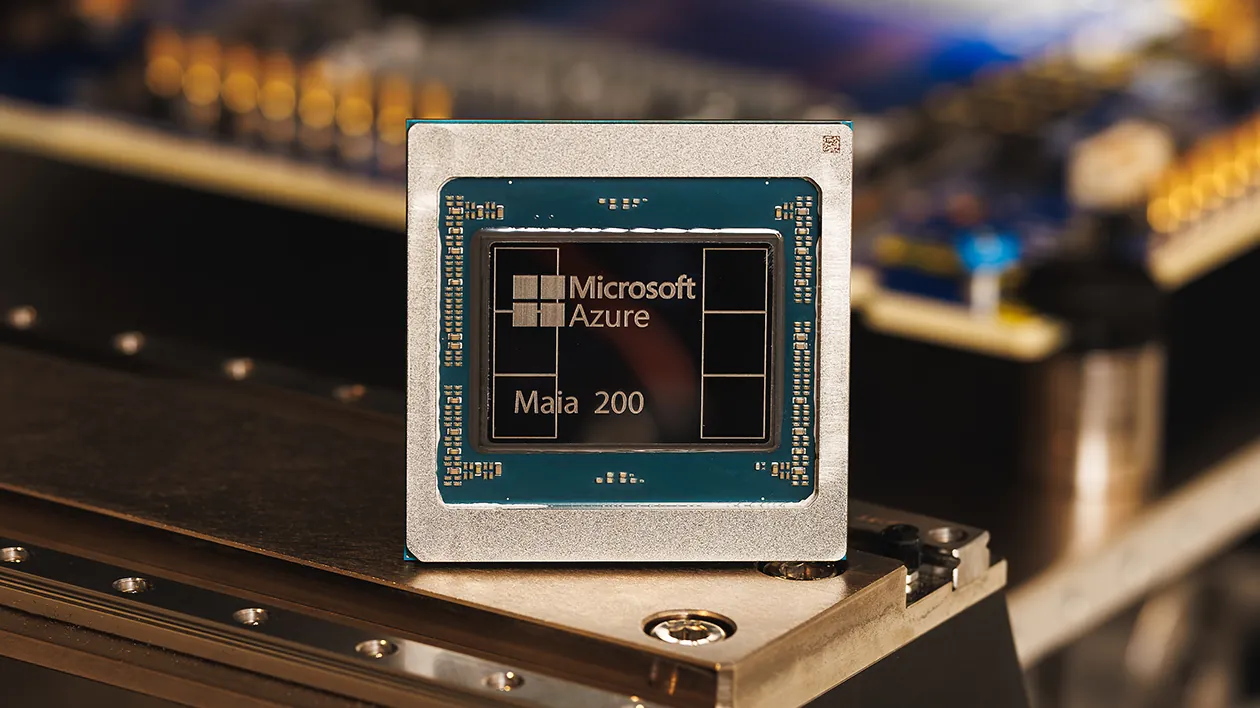
Microsoft and Intel have widened one of the oldest partnerships in computing, and the most interesting part of the deal is a bridge a few millimetres wide. In a joint announcement dated 17 November 2026, published by Microsoft on its Source newsroom and by Intel in its own newsroom, the two companies said Microsoft is the first company to announce use of Intel Foundry’s EMIB advanced packaging technology for Azure first-party silicon. EMIB, short for Embedded Multi-die Interconnect Bridge, connects the separate chiplets inside a modern processor package through small silicon bridges set into the package substrate, letting a cloud operator combine dies made in different processes inside one product.
The agreement is a long-term expansion of the companies’ collaboration across Azure infrastructure, aimed at growing cloud and AI demand. Alongside the packaging commitment, it confirms multi-year Intel Xeon supply capacity for Azure, including instances of the next generation of server CPUs, codenamed Diamond Rapids, and it extends joint work across the Azure roadmap and Intel-based Azure hardware systems. For Intel, whose foundry business needs marquee outside customers, a public packaging commitment from Microsoft is the headline. For Microsoft, the headline is security of supply for the processors its cloud still runs on.
“Our customers need infrastructure built around the workloads that matter to them”
, Saurabh Dighe, corporate vice president, Azure System & Architecture, Microsoft
Memory, acceleration and confidential computing
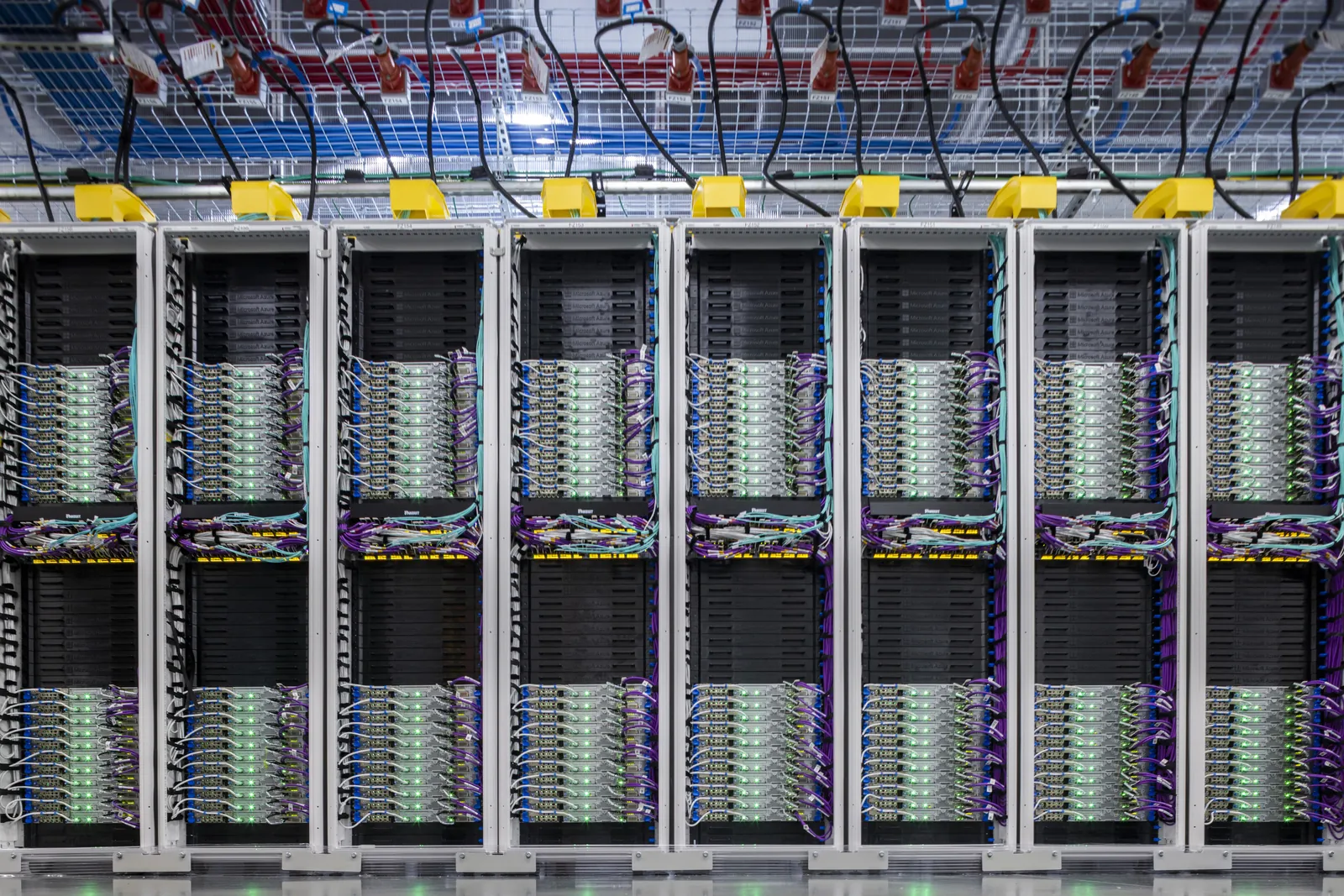
The rest of the announcement is about the systems around the processors. The companies will collaborate on Intel Xeon with Compute Express Link, or CXL, to improve memory efficiency across Azure, and on Intel QuickAssist Technology and confidential computing. The release attaches two performance figures to that work, both of them the companies’ own measurements with footnoted test setups. The first claims up to 2.3 times greater performance and memory flexibility for demanding workloads in Azure M-series v4 virtual machines using CXL memory and Intel Flat Memory Mode in Xeon 6 processors. The footnote compares a 76-vCPU virtual machine with 1,764 GB of memory, split between DRAM and CXL, against a 64-vCPU machine with 1,007 GB of DRAM only, on a sandbox microVM workload tested on 10 November 2026, and notes that results may vary.
The second figure claims up to 2.5 times faster SQL Server backups on Azure through what the companies describe as the first Intel QuickAssist enabled virtual machines in the cloud, again with a fully footnoted pair of test systems and a testing date of 2 November 2026. The confidential computing element concerns Intel Trust Domain Extensions, which encrypt a virtual machine’s memory and CPU register state as confidential virtual machines move between hosts. Both figures should be read as vendor measurements on named configurations, not as general Azure performance promises, and the companies present them that way.
“Through use of our advanced packaging capabilities with EMIB to scale future generations of Azure infrastructure, Intel and Microsoft can combine the flexibility of heterogeneous integration with the manufacturing scale required for the AI era”
, Naga Chandrasekaran, executive vice president, chief technology and operations officer and general manager of Intel Foundry
What the announcement does not say
The release is precise about direction and silent about the particulars that would let anyone size the deal. It names no Azure chip that will use EMIB packaging, no process node, no production date, no volumes and no financial terms, and it gives no delivery schedule for Diamond Rapids instances beyond confirming the supply capacity. That restraint is itself the news discipline here: one named packaging commitment, one confirmed supply line, and a set of joint engineering programmes, with everything else left for later disclosures.
Even so, the direction matters. Cloud operators increasingly design their own silicon, and the contest for their business is shifting from who fabricates the wafer to who can package many specialised dies into one reliable product. By putting its name to EMIB first, Microsoft has given Intel’s packaging technology its most public endorsement yet, and by securing Xeon capacity in the same document it has hedged the present while it experiments with the future. The disruption is quiet, contractual and, in this industry, exactly how the ground moves.

Keep reading
More from the filing cabinet.
Innovation · News · North America · United States
Washington’s $350 Million Quantum Wager: From Blueprints to Hardware
DARPA advanced four more companies to the final stage of its Quantum Benchmarking Initiative, while the Pentagon lined up a conditional $150 million loan for PsiQuantum’s factory.
Features · Evergreen · Global · the idea, not a place
What “Disruptive” Actually Means
The word on our masthead has a precise definition, and most people use it wrong. A field guide to Clayton Christensen’s theory, thirty years on.
Technology · Evergreen · Global · the industry, not a place
Moore’s Law at Sixty: What Gordon Moore Actually Predicted
It wasn’t a law, it wasn’t about speed, and the doubling period changed. The most famous prediction in technology, read properly.