
DISRUPTIVE / SCIENCE / NEWS
FILE Nº 032
Science · News
The Last Big Piece: ITER’s Final Vacuum Vessel Sector Reaches Cadarache
Europe has delivered the fifth and last of its vacuum vessel sectors for the ITER fusion experiment in southern France — the ninth and final sector overall — closing a 16-year manufacturing programme and putting every core component of the machine on site.
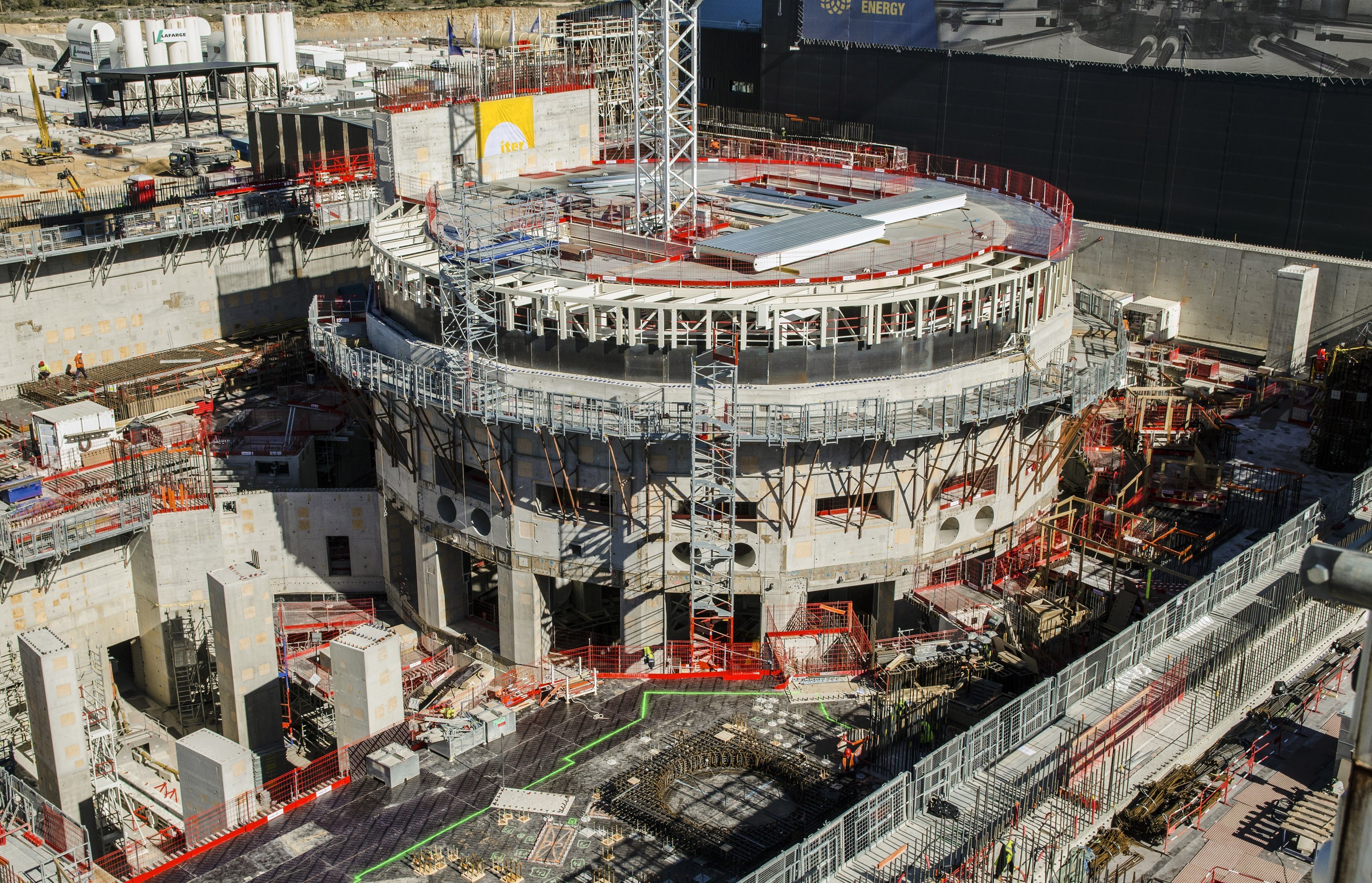
The last large component of the ITER fusion machine arrived at Cadarache, in southern France, on Friday 2 October 2026: vacuum vessel sector #2, built in Europe, delivered still in its protective wrapping. On Monday 5 October the ITER community gathered on the worksite to mark the milestone — the ninth and final sector of the vessel that will house the fusion reaction.
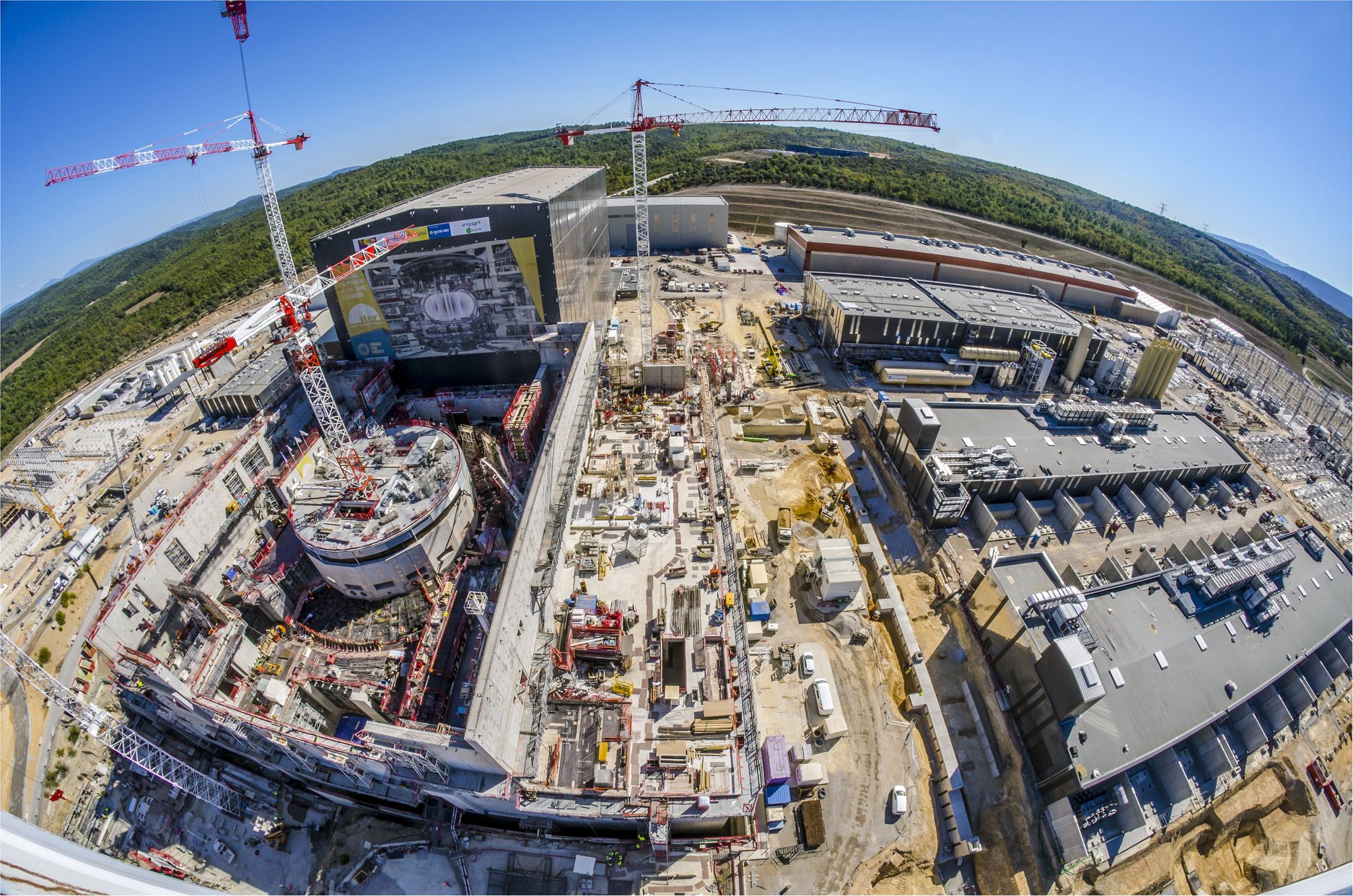
With this delivery, every component needed to complete the core ITER machine is now on site. The ITER Organization lists them: all toroidal field coils, poloidal field coils, correction coils, central solenoid magnets, vacuum vessel sectors and thermal shield sets have converged at Cadarache, many of them after decades of development in factories across the ITER member states.
“the delivery of the last vacuum vessel sector will allow us to pursue machine assembly activities according to schedule”
— Pietro Barabaschi, ITER Director-General
Sixteen years in the making
The vacuum vessel has nine sectors in total: Europe produced five and the Republic of Korea four. Europe’s five were made by Fusion for Energy (F4E), the European Domestic Agency, with the AMW consortium — Ansaldo Nucleare, Westinghouse Electric Company and Walter Tosto — across a supply chain of at least 15 companies. Sector segments were produced at Westinghouse’s Monfalcone works and Walter Tosto’s Chieti works in Italy, assembled and welded into complete sectors, then transported by sea and land to Cadarache; logistics provider DAHER moved the final sector, which left Monfalcone in mid-September. All five European sectors were delivered over the past two years, at the end of a programme Europe worked on for more than 16 years.
“It’s a high-tech component made in Europe, by European companies”
— Marc Lachaise, Director of Fusion for Energy
The vessel itself is a double-walled stainless-steel container inside which the plasma will burn, held away from the walls by superconducting magnets. Once its nine sectors are joined, it will measure 19.4 metres in diameter and 11.4 metres in height, and weigh approximately 5,200 tonnes. Ansaldo Nucleare counts 750 kilometres of welding beads across Europe’s five sectors — and, in a detail that says much about modern heavy industry, F4E used AI tools to cross-check the data collected by technical teams in the factories during the programme. The sectors underwent detailed inspections to meet standards set by France’s Nuclear Safety Authority.
Assembly is the next chapter
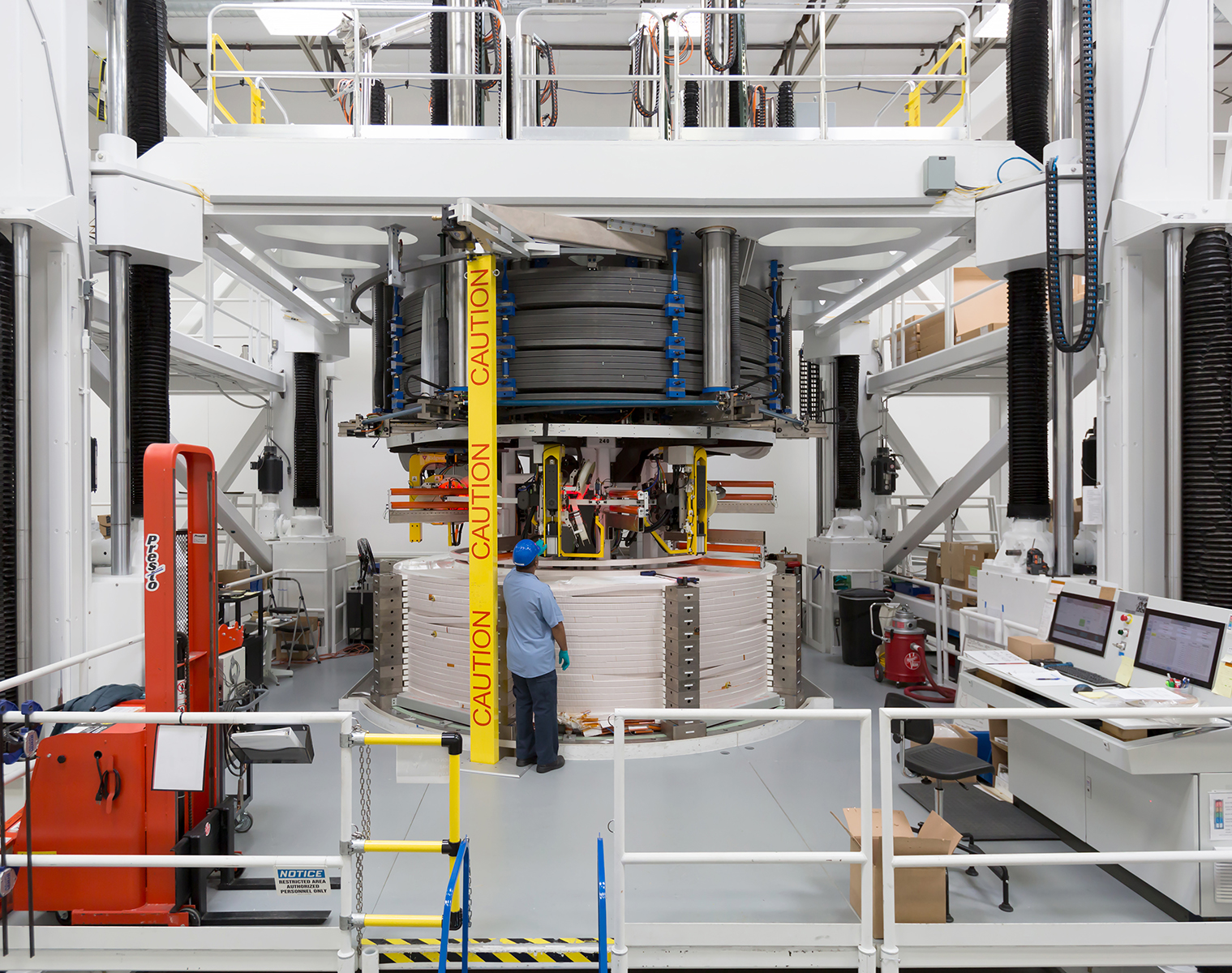
The work has already moved on. On 7 October 2026, ITER removed a radial beam from a sector module in the tokamak pit for the first time — an 80-tonne temporary support beam, extracted by a team of more than 20 people in under two hours — opening the way to welding in the pit. On ITER’s published schedule, the final sector module is to be lowered into the pit in spring 2027, with the last radial beam expected to be removed in September 2027.
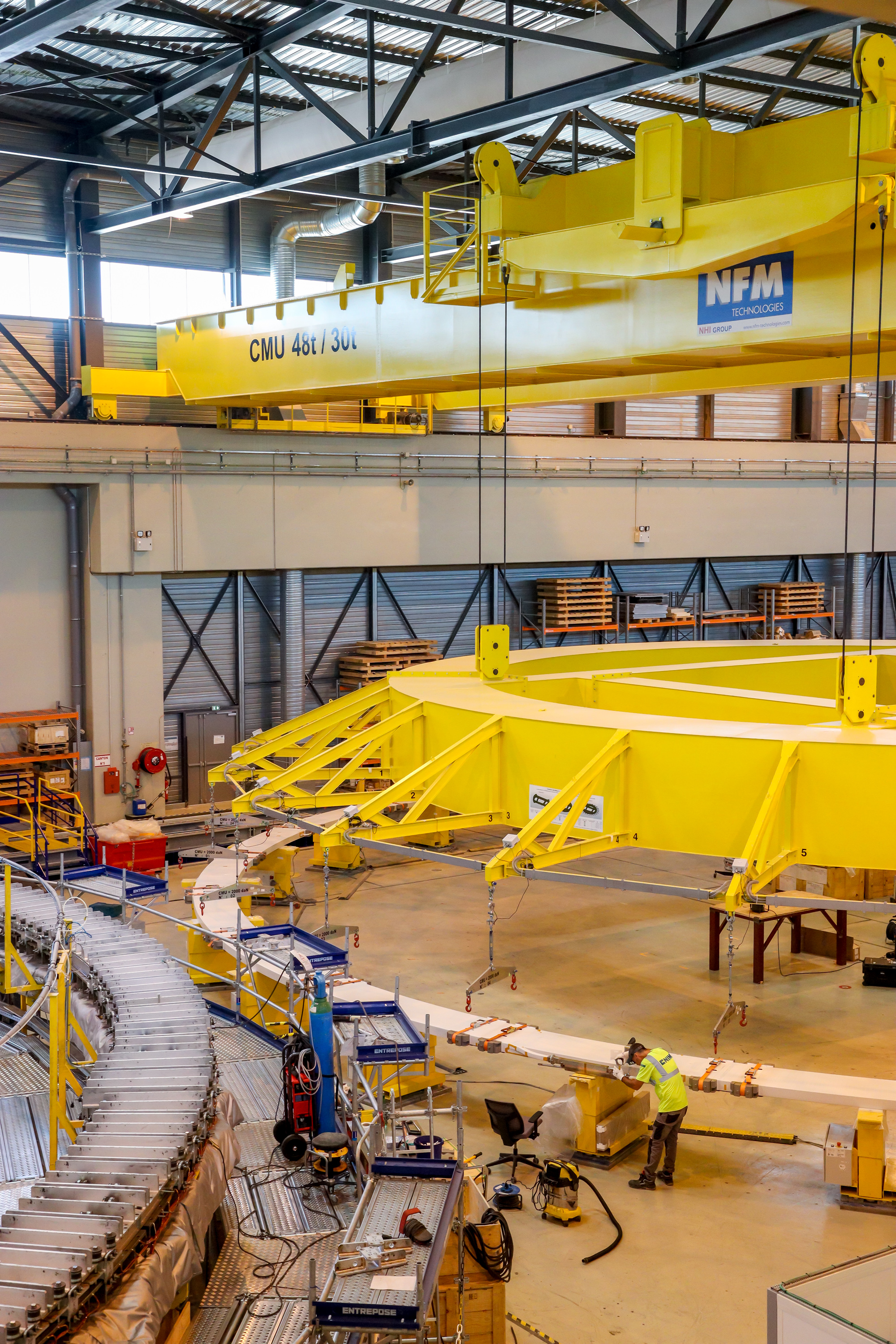
The honest caveat is ITER’s own: in-vessel components, plant systems and other equipment are still to come, and much assembly work lies ahead. But the disruption lens of this milestone is logistical, not physical. Fusion’s hardest problem for a generation has been industrial — whether components of this size and precision could be manufactured on three continents and made to meet in one pit in Provence. With the ninth sector on site, that question has its answer.
Keep reading
More from the filing cabinet.
Science · Explainer · Europe · Franco-Swiss border
How the Large Hadron Collider Works: A Proton’s Journey Through CERN’s 27-Kilometre Ring
A proton at CERN is not accelerated once but five times, by five different machines, before it enters a ring colder than outer space and collides inside detectors the size of buildings. The journey, stage by stage.
Features · Retrospective · Europe–North America · transatlantic
Concorde at Fifty: The Airliner That Flew at Twice the Speed of Sound — and Outran Its Own Economics
On 21 January 1976 two Concordes lifted off at the same moment, from London and Paris, and passenger flight went supersonic for 27 years. Fifty years on, with NASA’s X-59 supersonic and the FAA rewriting the rule that confined Concorde to the oceans, the question it posed — how much is time worth? — is open again.
Business · News · Asia · South Korea
Humanoids Are Becoming the Memory Industry’s Next Growth Engine
Counterpoint Research expects DRAM demand from humanoid robots to rise more than twentyfold by 2030 — and Samsung and SK Hynix want the AI data-center playbook to repeat.