
DISRUPTIVE / SCIENCE / EXPLAINER
FILE Nº 034
Science · Explainer
How the Large Hadron Collider Works: A Proton’s Journey Through CERN’s 27-Kilometre Ring
A proton at CERN is not accelerated once but five times, by five different machines, before it enters a ring colder than outer space and collides inside detectors the size of buildings. The journey, stage by stage.
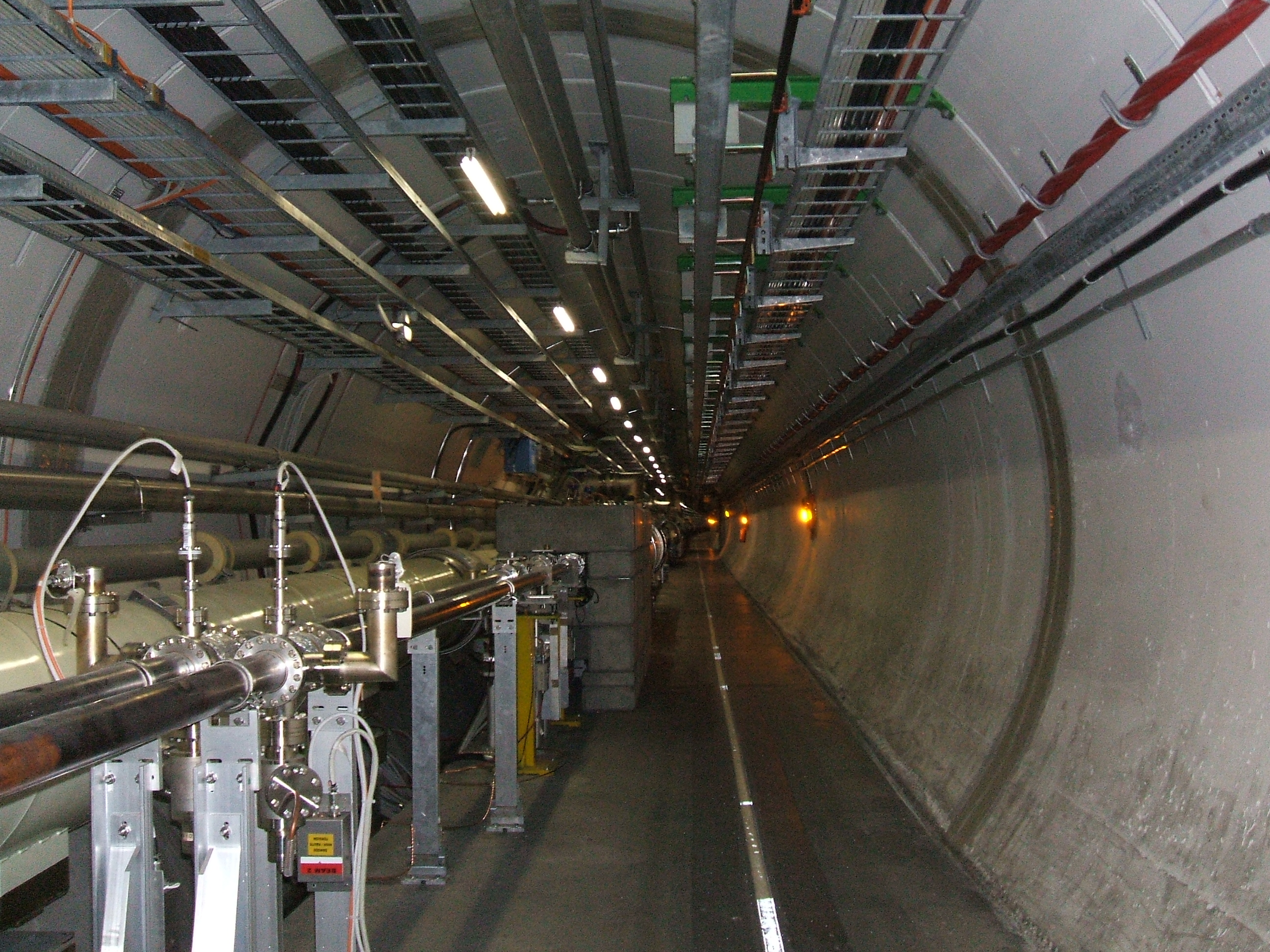
CERN calls the Large Hadron Collider the world’s largest and most powerful particle accelerator. It first started up on 10 September 2008, and it sits in a tunnel about 100 metres underground on the Franco-Swiss border near Geneva: a 27-kilometre ring of superconducting magnets and accelerating structures. But the LHC is only the last machine a proton meets. The journey starts much smaller.
Stage one: the relay begins
Since 2020 the chain has started at Linac4, a linear accelerator that accelerates negative hydrogen ions to 160 MeV. On injection into the next machine, the Proton Synchrotron Booster, the ions are stripped of their electrons — leaving bare protons — and the Booster takes the beam to 2 GeV.
Stages two and three: older rings do the middle work
The Proton Synchrotron then pushes the beam to 26 GeV, and the Super Proton Synchrotron takes it to 450 GeV. CERN’s complex is a succession of machines of increasing size, each boosting the beam’s energy before handing it to the next. The LHC, for all its fame, is only the final element in the chain — a relay in which every handoff has to work, every time.
Stage four: two beams, opposite directions, one ring
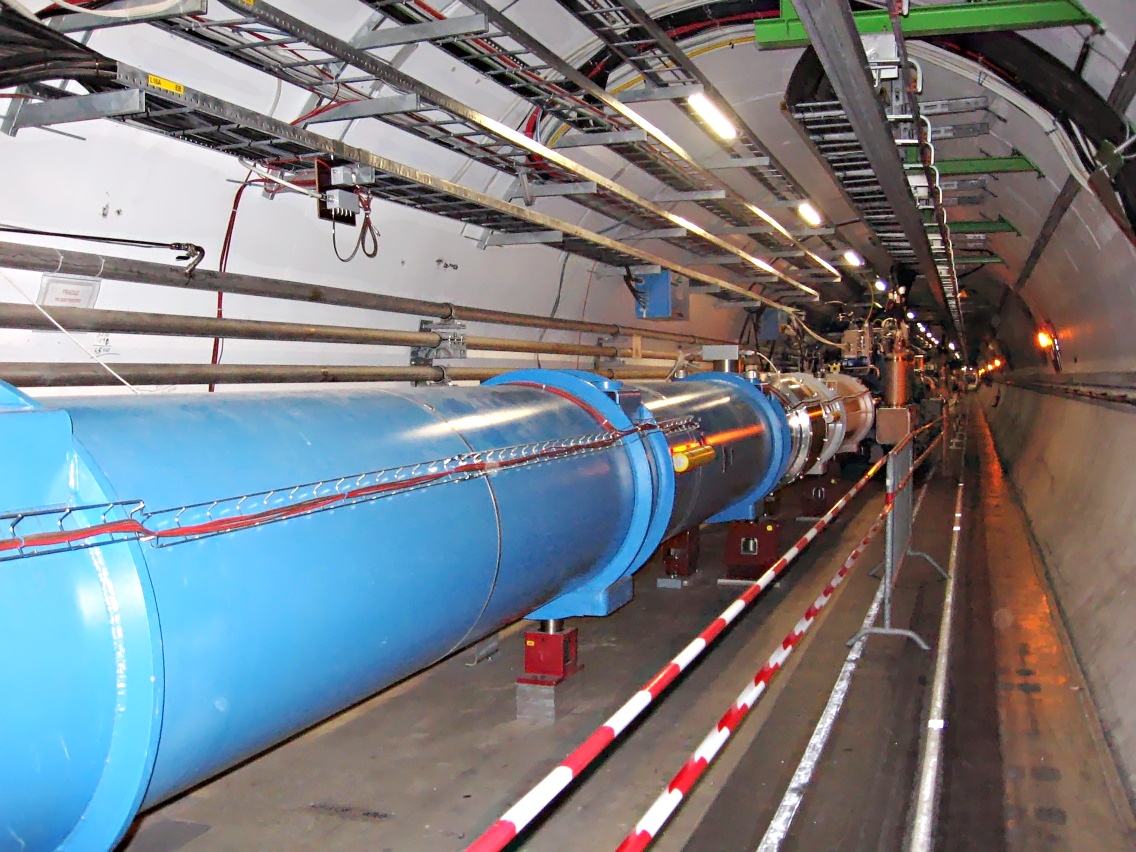
Protons are transferred into the LHC’s two beam pipes, one beam circulating clockwise and the other anticlockwise. CERN states that it takes 4 minutes and 20 seconds to fill each ring, and that the beams can then circulate for many hours. The LHC’s record beam energy is 6.8 TeV per beam — so at the collision points, two beams meet with a total energy of 13.6 TeV.
Magnets colder than outer space
The beams travel in separate pipes kept at ultrahigh vacuum, steered by superconducting electromagnets chilled to −271.3°C — colder, as CERN puts it, than outer space — using a liquid-helium distribution system. The bending is done by 1,232 dipole magnets, each 15 metres long; 392 quadrupole magnets, each five to seven metres long, focus the beams, and a further set of magnets squeezes them just before collision. CERN’s own comparison for the precision involved: it is akin to firing two needles from 10 kilometres apart so that they meet halfway.
The collision happens inside a detector
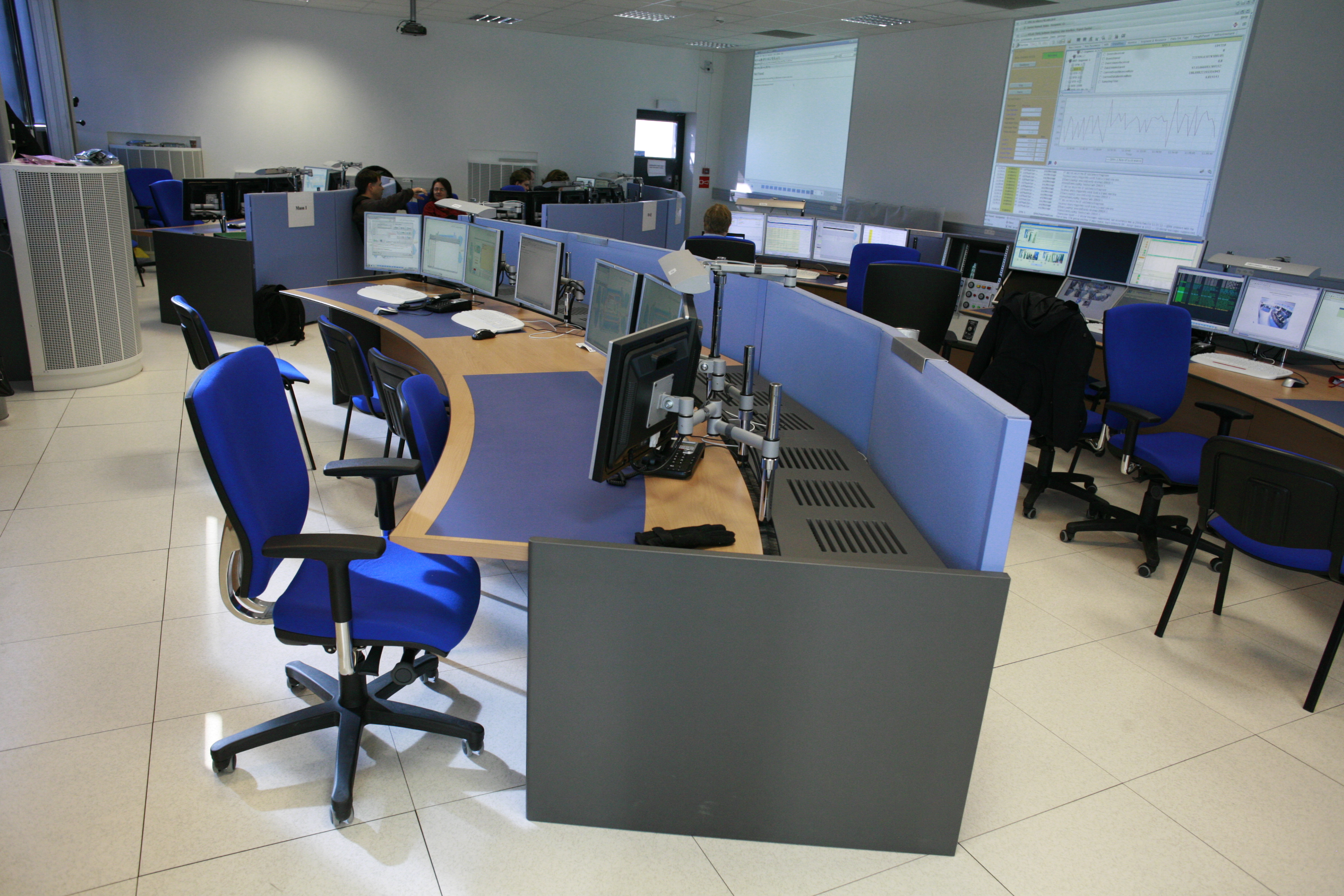
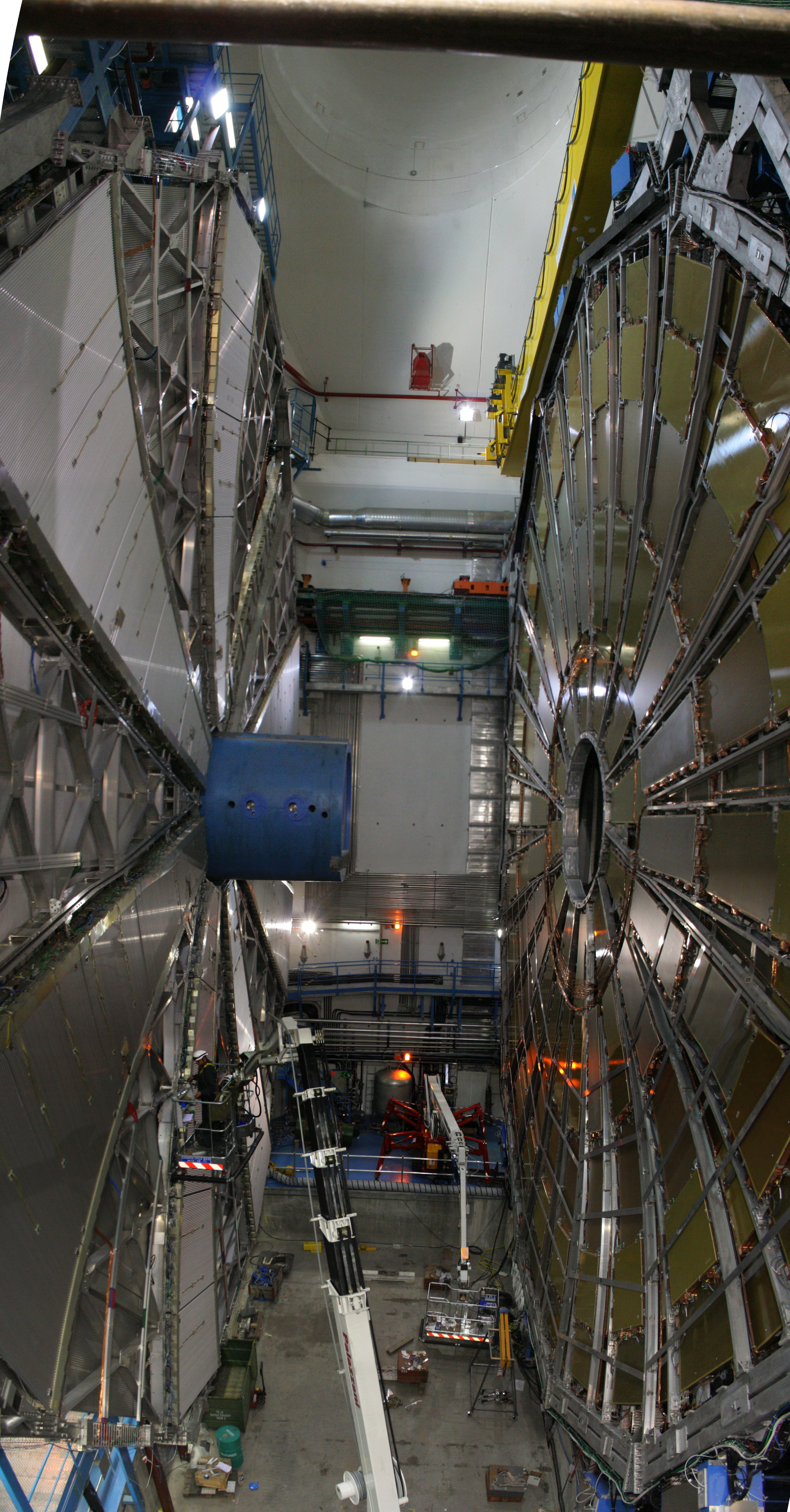
From the CERN Control Centre, the beams are brought into collision at four locations around the ring, at the ATLAS, CMS, ALICE and LHCb detectors; nine experiments are installed at the LHC in total. ATLAS, one of the two general-purpose detectors, is 46 metres long, 25 metres high and 25 metres wide, weighs 7,000 tonnes, and sits in a cavern 100 metres underground near Meyrin. It records the products of collisions with six detecting subsystems arranged in layers, behind a trigger system that decides, in real time, which events are worth keeping.
What a successful collision looks like arrived on 4 July 2012. At a CERN seminar that day, ATLAS and CMS each reported a new particle in the mass region around 125 to 126 GeV, at the 5-sigma level of significance particle physics requires — an observation announced as consistent with the long-sought Higgs boson. The two detectors are deliberately different: CMS uses different technical solutions and a different magnet-system design from ATLAS, so a signal seen by both is a signal seen independently.
“It’s hard not to get excited by these results”
— Sergio Bertolucci, CERN Research Director
“We observe in our data clear signs of a new particle”
— Fabiola Gianotti, ATLAS spokesperson
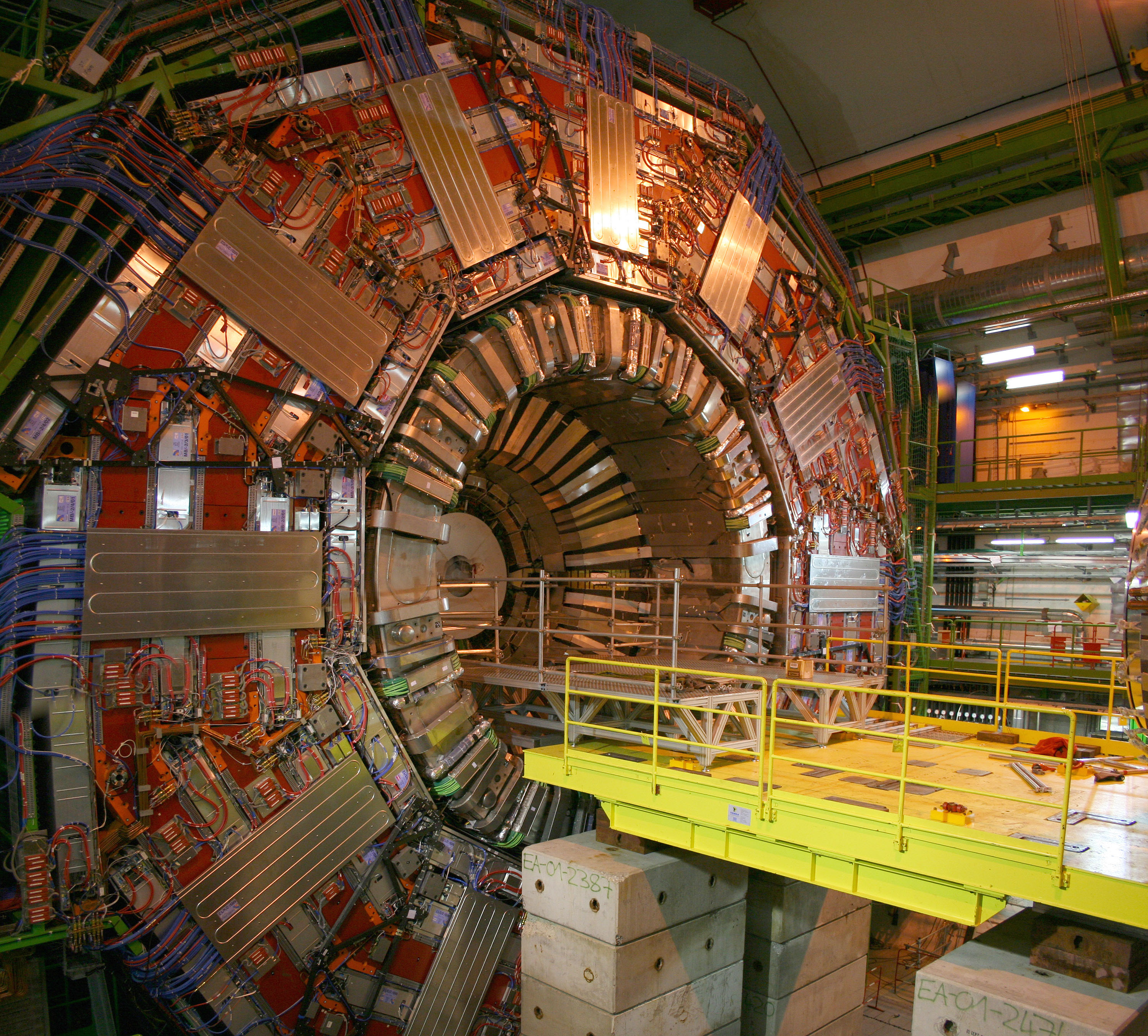
The scale of the collaboration is part of the mechanism. CERN lists more than 5,500 scientists from 245 institutes in 42 countries working on ATLAS alone — a figure dated March 2022. That is the honest summary of how the LHC works: less a single invention than a relay, of machines handing a beam upward in energy, of magnets colder than space holding it on a circle, and of institutions handing the results to one another. Each handoff is where it can fail — and, on the evidence of 2012, where it works.
Keep reading
More from the filing cabinet.
Business · News · Asia · South Korea
Humanoids Are Becoming the Memory Industry’s Next Growth Engine
Counterpoint Research expects DRAM demand from humanoid robots to rise more than twentyfold by 2030 — and Samsung and SK Hynix want the AI data-center playbook to repeat.
Technology · News · Europe · Dresden, Germany
Dresden’s Billion-Euro Bet on Chips for the Physical World
GlobalFoundries has topped out its €1.1 billion SPRINT fab expansion and unveiled FDX Fusion — a chip platform designed for what the industry now calls Physical AI.
Business · News · Middle East · Gulf states
Microsoft’s $10 Billion Gulf Framework: the AI Build-Out Goes Sovereign
Redmond’s decade-long commitment to the UAE, Saudi Arabia, Qatar, and Kuwait is about more than capacity — it is about who controls the region’s AI infrastructure.