
DISRUPTIVE / FEATURES / RETROSPECTIVE
FILE Nº 035
Features · Retrospective
Concorde at Fifty: The Airliner That Flew at Twice the Speed of Sound — and Outran Its Own Economics
On 21 January 1976 two Concordes lifted off at the same moment, from London and Paris, and passenger flight went supersonic for 27 years. Fifty years on, with NASA’s X-59 supersonic and the FAA rewriting the rule that confined Concorde to the oceans, the question it posed — how much is time worth? — is open again.
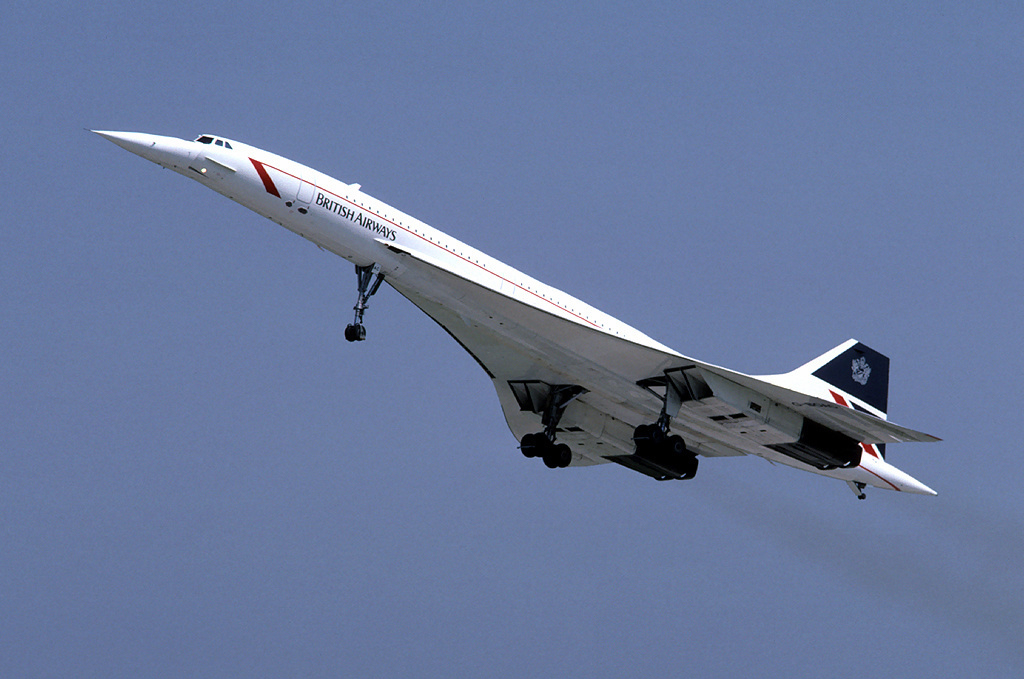
Fifty years ago, at 11:40 London time on 21 January 1976, supersonic passenger flight began — twice, at the same moment. A British Airways Concorde, G-BOAA, flight BA300, departed London Heathrow for Bahrain. An Air France Concorde, F-BVFA, departed Paris Charles de Gaulle for Rio de Janeiro via Dakar. The departures were synchronised, one time zone apart, by two airlines and two governments that had built one aircraft together.
What the first flights proved was time. The Air France journey to Rio, with the Dakar stop, took 7 hours 26 minutes — about four hours faster than a conventional subsonic service on the same route. The British Airways flight made London–Bahrain in about four hours, against six and a half subsonic. Concorde cruised at Mach 2.04 — 1,354 mph, or 2,180 km/h — at up to 60,000 feet, with seating for 92 to 128 passengers. It was, and remains, one of only two supersonic transports ever to enter commercial service, the other being the Soviet Tupolev Tu-144.
A machine built by two countries
Concorde was jointly developed and manufactured by France’s Sud Aviation, later Aérospatiale, and the British Aircraft Corporation, under the Anglo-French cooperation agreement signed on 29 November 1962. The prototype 001 first flew on 2 March 1969 from Toulouse; the British prototype 002 followed from Filton on 9 April 1969. Twenty aircraft were built in all, including six prototypes and development aircraft — and the programme’s cost reached £1.3 billion against an original estimate of £70 million, an overrun that set the terms of everything that followed.
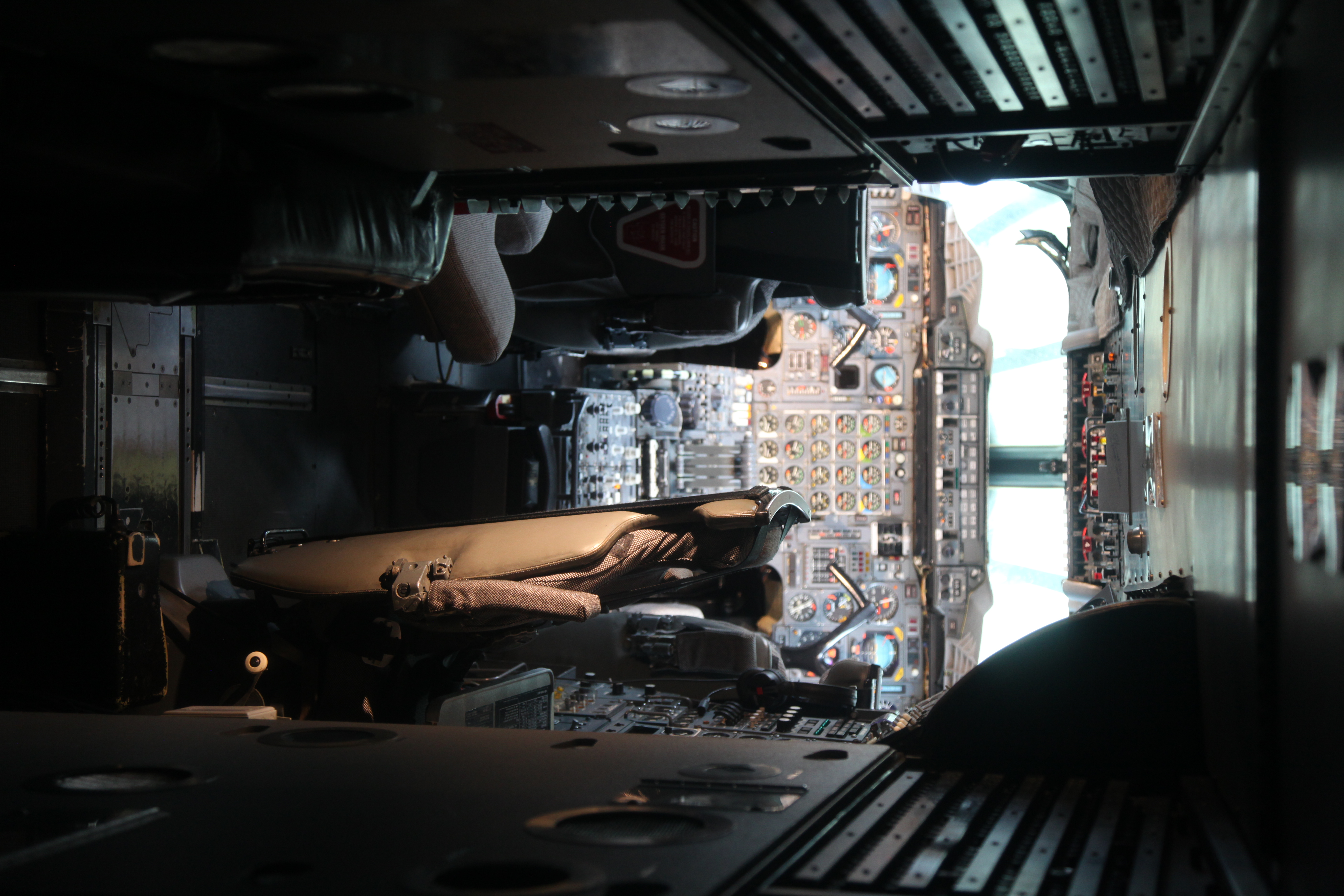
The engineering was a catalogue of firsts and extremes: an ogival delta wing; a droop nose that lowered for takeoff and landing so the crew could see the runway; four Rolls-Royce/Snecma Olympus 593 turbojets with reheat; the first analogue fly-by-wire flight controls on an airliner; and pitch trim achieved by pumping fuel around the fuselage to shift the centre of gravity between subsonic and supersonic flight. The airframe itself changed shape in service: British Airways records that Concorde measured nearly 204 feet in length and stretched between six and ten inches in flight as the skin heated — which is why the fleet was painted in a specially developed white paint, to shed that heat.
The network that shrank to one route
The American door opened slowly, and never fully. Services from London and Paris to Washington Dulles began on 24 May 1976, but regular flights to New York JFK — the route the aircraft was built for — began only on 22 November 1977, after a US federal court ruled the Port Authority’s ban on Concorde illegal. Worse for the business case, the FAA had banned civil supersonic flight over US land in 1973: Concorde could fly supersonically only over water. A machine designed to shrink continents was confined to the ocean crossings.
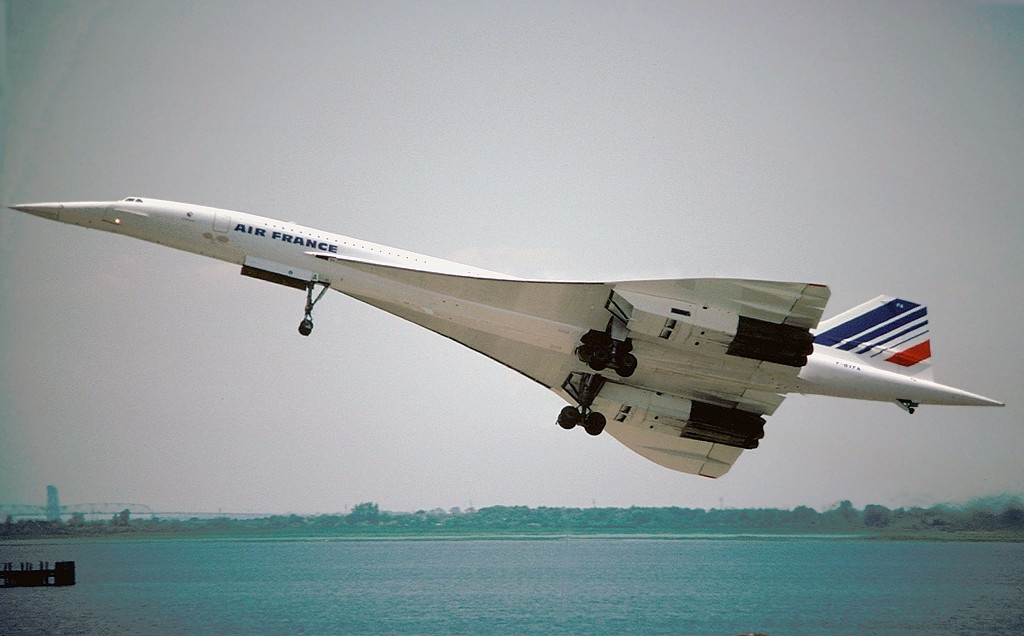
Both operators narrowed to a small number of routes, and in the end to one that paid: New York. Air France ended regular Rio services in 1982 and concentrated on Paris–New York; British Airways focused primarily on London–New York, where the time saving commanded premium fares. British Airways records just under 50,000 flights by its Concorde fleet and more than 2.5 million passengers carried supersonically. The fastest transatlantic crossing came on 7 February 1996: New York to London in 2 hours 52 minutes 59 seconds. A typical crossing took a little under three and a half hours, against about eight subsonic.
The end, in three blows
On 25 July 2000, Air France Flight 4590 crashed shortly after takeoff from Paris Charles de Gaulle, killing all 109 people on board and four people on the ground — Concorde’s only fatal accident. The fleet was grounded, modified and returned to service, but demand never fully recovered. Then came the post-September 11 slump in air travel, rising maintenance costs, and Airbus’s decision to discontinue maintenance support for the type.
Air France flew its last commercial Concorde services in May 2003. British Airways retired its fleet on 24 October 2003; its final scheduled commercial flight was BA002 from JFK, operated by G-BOAG. Twenty-seven years of commercial supersonic flight — a technical triumph sustained to the end — closed not with a failure of the machine but with the arithmetic around it: a cabin of about 100 seats, high fuel burn, a network narrowed by the boom ban, and support costs no two airlines could carry alone.
Fifty years on
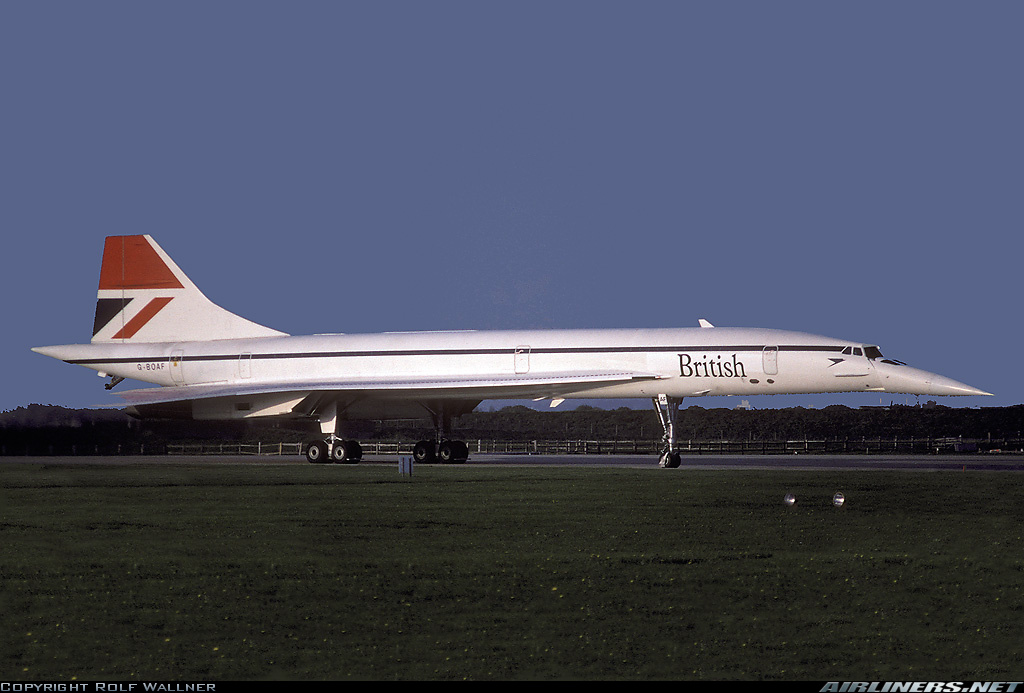
The anniversary was marked where the aircraft survives. On 21 January 2026, Aerospace Bristol hosted its biggest-ever gathering of former Concorde crew — more than 30 former captains, first officers, flight engineers and cabin crew — and Concorde Alpha Foxtrot, G-BOAF, the last Concorde to fly, performed a timed droop-nose moment at 11:40, synchronised with preserved Concordes at Manchester Airport’s Runway Visitor Park and at IWM Duxford. Air France marked the anniversary with a documentary released in February 2026.
“Concorde still has an extraordinary ability to stop people in their tracks”
— Sally Cordwell, CEO of Aerospace Bristol
The world is trying again
The second act is being designed, point by point, around Concorde’s failure modes. Boom Supersonic’s XB-1 demonstrator broke the sound barrier over the Mojave Desert in January 2025 — the first US-manufactured civil supersonic jet to do so — demonstrating a flight technique intended to keep the boom from reaching the ground; Boom’s planned Overture airliner is specified at Mach 1.7 with 64 to 80 seats. NASA’s X-59 quiet supersonic research aircraft, the centrepiece of the Quesst mission, flew faster than the speed of sound for the first time on 5 June 2026. And the FAA’s proposed rule, stemming from Executive Order 14304, would establish a noise-based certification standard and repeal the 1970s-era ban on supersonic flight over the United States; the FAA aims to finalise its supersonic rules by mid-2027. No new supersonic airliner has yet entered service.
“The executive order unlocks the future of supersonic flight”
— Sterling Wiggins, FAA rulemaking team member
Which returns the story to the question Concorde posed in 1976 and never stopped posing: how much is time worth, and who will pay for it? Concorde answered it for a narrow market at a price two governments had already absorbed. The revival now under way is an attempt to answer it again — with the boom engineered away, the fuel burn attacked, and the rulebook rewritten first. Fifty years after two aircraft lifted off at the same moment, that is the most Concorde-like thing about the new programmes: they are not really building a faster airliner. They are rebuilding the conditions that let one exist.
Keep reading
More from the filing cabinet.
Technology · News · Europe · Dresden, Germany
Dresden’s Billion-Euro Bet on Chips for the Physical World
GlobalFoundries has topped out its €1.1 billion SPRINT fab expansion and unveiled FDX Fusion — a chip platform designed for what the industry now calls Physical AI.
Business · News · Middle East · Gulf states
Microsoft’s $10 Billion Gulf Framework: the AI Build-Out Goes Sovereign
Redmond’s decade-long commitment to the UAE, Saudi Arabia, Qatar, and Kuwait is about more than capacity — it is about who controls the region’s AI infrastructure.
Innovation · News · North America · United States
Washington’s $350 Million Quantum Wager: From Blueprints to Hardware
DARPA advanced four more companies to the final stage of its Quantum Benchmarking Initiative, while the Pentagon lined up a conditional $150 million loan for PsiQuantum’s factory.