
DISRUPTIVE / BUSINESS / NEWS
FILE Nº 001
Business · News
Humanoids Are Becoming the Memory Industry’s Next Growth Engine
Counterpoint Research expects DRAM demand from humanoid robots to rise more than twentyfold by 2030 — and Samsung and SK Hynix want the AI data-center playbook to repeat.
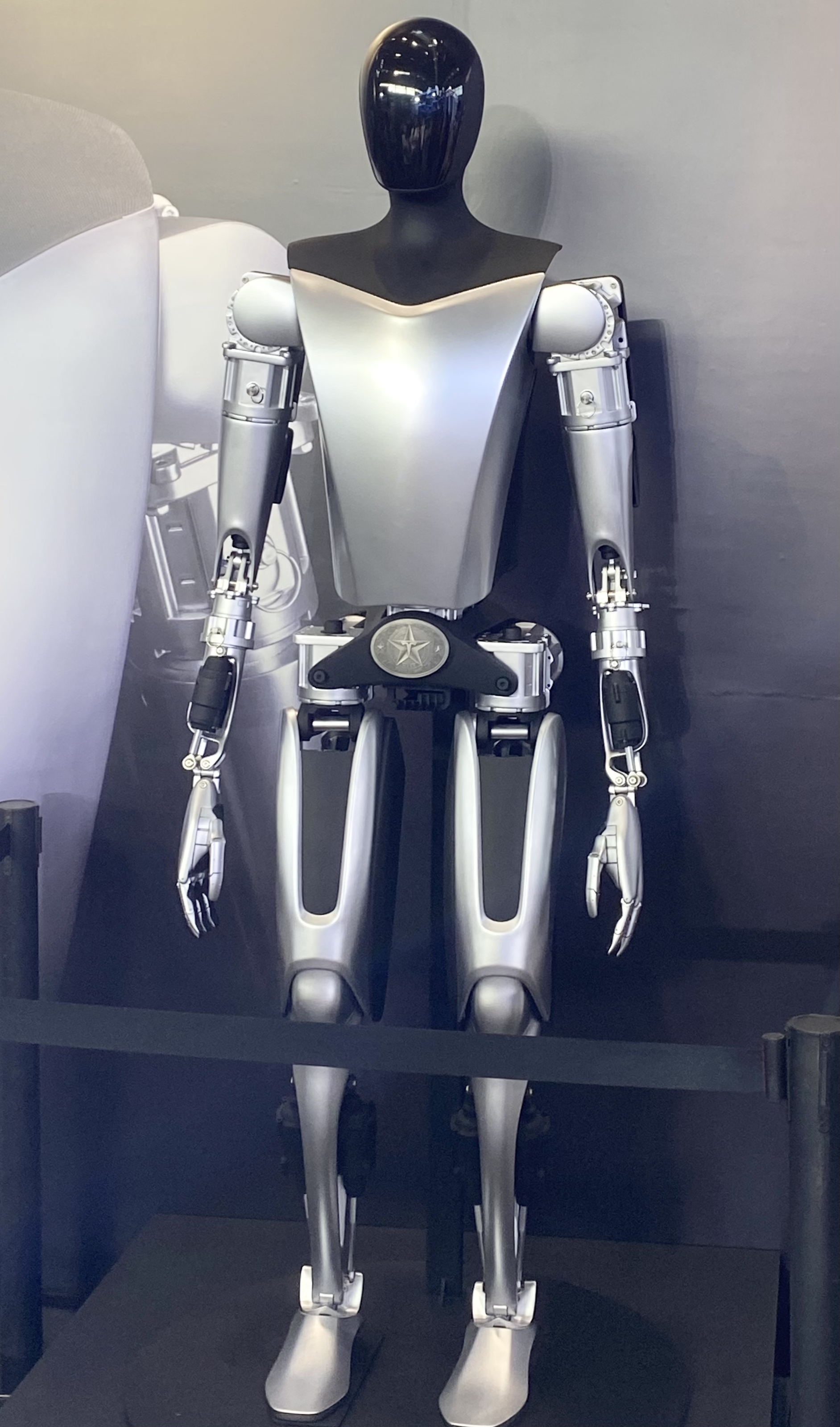
The memory industry has found its next growth story, and it walks on two legs. As humanoid robots move from laboratory demonstrations toward commercial deployment, the chips that give them their memories are becoming one of the semiconductor industry’s most closely watched new markets.
According to market research firm Counterpoint Research, demand for the DRAM used in the “brains” of humanoid robots will rise from roughly 8,300 terabits in 2026 to about 172,000 terabits by 2030 — an increase of more than twenty times in four years. The average DRAM capacity fitted to each robot is expected to more than double over the same period, from 19 gigabytes this year to 39 gigabytes by 2030.
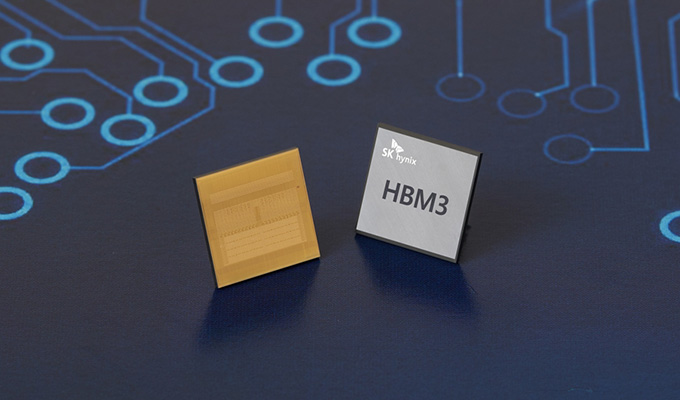
The pattern is familiar. Just as AI data centers sparked a boom in high-bandwidth memory, humanoid robots are emerging as the memory industry’s next major growth engine for Samsung Electronics and SK Hynix — the two companies that dominate advanced memory manufacturing.
Why robots are so hungry for memory
Humanoid robots process information collected in real time from cameras, LiDAR, and tactile sensors to decide how to move. The spread of end-to-end AI models that fuse multiple data types — plus “world models” that learn and predict the surrounding environment — is pushing memory requirements steadily upward.
Power is the binding constraint. Humanoids run on batteries, so they must process large amounts of data while minimizing consumption — which is why low-power DRAM and high-capacity NAND flash are expected to be the key demand sources, with three-dimensional DRAM a longer-term variable.
A forecast, not a guarantee
Counterpoint’s analysts attach a caveat worth repeating: actual market growth will depend on how fast humanoids commercialize, how quickly production scales, and how fast per-product memory specifications improve. A forecast is a model of the future, not the future.
The compute side of the robot is expanding in parallel. Counterpoint expects demand to grow for processing chips such as NVIDIA’s graphics processors, alongside custom semiconductors being developed by automakers including Tesla and Xiaopeng.

For Samsung and SK Hynix, the prize is diversification. Counterpoint estimates that in the second quarter of 2026, SK Hynix held 50 percent of the global high-bandwidth-memory market and Samsung 33 percent — dominance built on the AI data-center boom that both companies now hope to extend into robotics.
Keep reading
More from the filing cabinet.
Business · News · Middle East · Gulf states
Microsoft’s $10 Billion Gulf Framework: the AI Build-Out Goes Sovereign
Redmond’s decade-long commitment to the UAE, Saudi Arabia, Qatar, and Kuwait is about more than capacity — it is about who controls the region’s AI infrastructure.
Innovation · News · North America · United States
Washington’s $350 Million Quantum Wager: From Blueprints to Hardware
DARPA advanced four more companies to the final stage of its Quantum Benchmarking Initiative, while the Pentagon lined up a conditional $150 million loan for PsiQuantum’s factory.
Features · Evergreen · Global · the idea, not a place
What “Disruptive” Actually Means
The word on our masthead has a precise definition — and most people use it wrong. A field guide to Clayton Christensen’s theory, thirty years on.